
Partner Content
Advanced Orthopedic Care, Closer to Home in Bergen County
Summit Health offers state-of-the-art treatment for residents who want to get back to the activities they love and the quality of life they deserve.
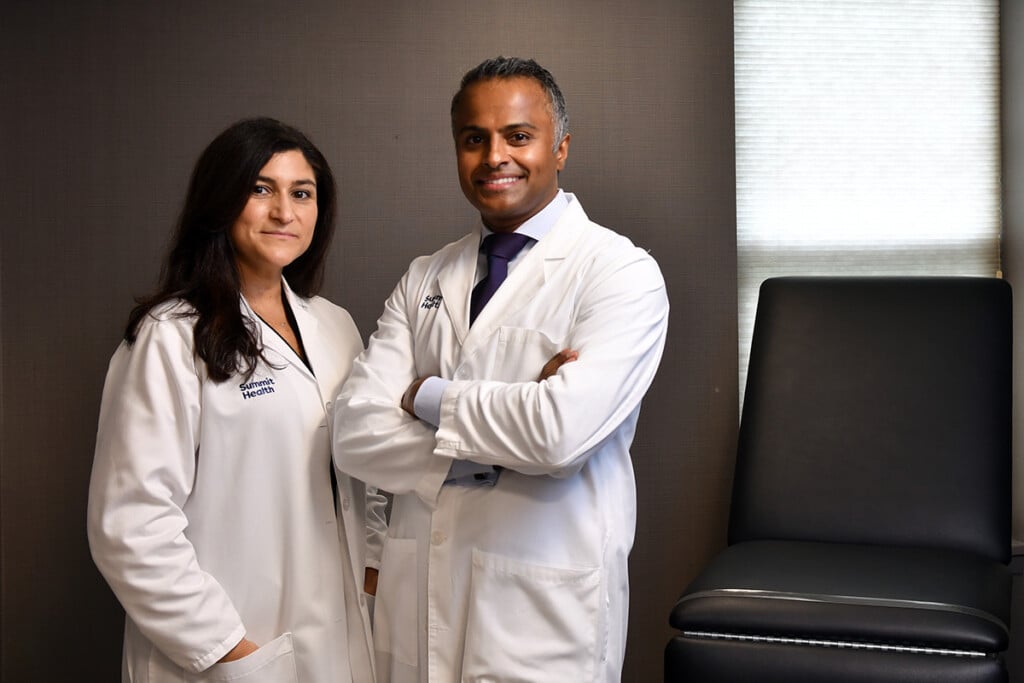
By Sarah Nolan
For Dr. Thomas K. John, an orthopedic surgeon at Summit Health, the most rewarding moments come when patients return to activities they thought pain had taken away – walking their daughter down the aisle, playing pickleball or simply using the stairs comfortably.
“Pain has a way of shrinking a person’s world,” says Dr. John, a hip and knee replacement specialist. “Helping them get that world back is why I do this work.”
With multiple locations across Bergen County, Summit Health provides award-winning individualized and convenient orthopedic care for residents looking to return to activities that bring them joy – whether that’s a retiree facing arthritis who wants to garden without pain or an impassioned student athlete who wants to get back to the playing field after an injury.
Dr. A. Ylenia Giuffrida, an orthopedic hand and microsurgery specialist at Summit Health, says it’s not her job to tell patients that they can’t do a desired activity.
“It is my job to help you be able to do it to the best ability possible,” she says. “Recreation has so many benefits, both physical and psychological, and also helps you live longer!”
When It’s Time to See a Specialist

Dr. A. Ylenia Giuffrida demonstrates ultrasound imaging of the hand and wrist. The technology provides detailed views of underlying structures and helps guide certain in-office procedures.
Dr. Giuffrida treats both pediatric and adult patients with hand, wrist and elbow injuries or disorders. Among the pediatric set, sports injuries are common, from fractures and ligament tears commonly seen in football and basketball players, to contusions or injuries to the hand, wrist and elbow that cheerleaders sometimes suffer.
Active adults with wrist and forearm injuries due to popular exercises like yoga, Pilates, spin, kickboxing, etc. often land in her office. Overuse at work can also cause issues, whether from manual labor or heavy computer use.
Dr. John specializes in adult reconstruction and joint replacement, diagnosing and treating a wide range of hip, knee and joint conditions.
Knowing when it’s time to see a specialist can be difficult, but the doctors agree – if pain, swelling or bruising persist despite rest and over-the-counter measures, you should be evaluated and the sooner the better – early evaluation often opens up more options, not fewer, and sometimes the solution is a quick and easy intervention.
“A good rule of thumb: If the pain is shaping your decisions, like skipping a walk, taking the elevator or turning down a trip, it’s worth getting answers,” Dr. John says.
Care That Caters to You

Dr. Thomas K. John uses a knee replacement model to explain joint mechanics. The hip and knee specialist considers each patient’s daily activities, limitations and priorities when developing a treatment plan.
At Summit Health, patients receive an individualized treatment plan built around their anatomy, health, and goals.
Dr. Giuffrida says factors like a patient’s age, occupation, activities, and personal goals play a “critical role” in how she approaches treatment.
“An X-ray tells me what’s happening inside the joint, but it doesn’t tell me what matters to you,” Dr. John says. “I want to know what your day looks like, what you’ve stopped doing because of the pain, and what you miss most.”
Dr. John says the biggest misconception about seeing an orthopedic surgeon is, “If I see a surgeon, they’ll want to operate.”
Sometimes a condition calls for a more conservative approach, the doctors say.
“If it is mostly a quality-of-life condition and we can get the patient to an acceptable level of recovery, then surgery is not always necessary,” Dr. Giuffrida says.
Nonsurgical options like physical therapy and targeted strengthening can take the pressure off a painful joint, Dr. John says. Anti-inflammatory medications and injections like corticosteroids can also provide relief.
“The goal is the get you moving comfortably for as long as possible,” Dr. John says. “Surgery becomes a conversation when these approaches are no longer giving you the quality of life you want.”
And if surgery is the best option? It can be daunting, but advances in medical devices and technology can reduce downtown and discomfort.
An example in Dr. Giuffrida’s world is surgery to correct trigger finger – a form of tendinitis that results in pain and mechanical symptoms when closing the finger.
Surgery was traditionally done in a hospital or surgery suite, but thanks to musculoskeletal ultrasounds, which allow doctors to see structures in great detail, and the development of special instruments, it can now be done in the office and takes only a few minutes, Dr. Giuffrida says. Locking resolves immediately and there are no stitches involved.
Dr. John says robotic-assisted and computer-navigated joint replacement helps doctors perform surgery with a high level of precision. One of few doctors in Bergen County who uses robotic and computer navigation systems from Stryker, Zimmer and Intellijoint, Dr. John says these tools can help with implant alignment and balancing the soft tissues around the joint; many patients experience a smoother, faster recovery.
“They’re not magic, and they’re not right for every case, but in the right hands and for the right patient, they’re valuable tools,” he says. “What matters most is still the surgeon’s judgement and experience in using them.”
Is pain from an injury or condition shrinking your world? Perhaps it’s time to get evaluated. Summit Health makes it easy, with convenient locations close to home, in Bergen County. Call 201-343-2277 to schedule an appointment with Dr. John or 201-343-2277 to schedule an appointment with Dr. Giuffrida. Visit summithealth.com for more information.
Questions Bergen County Patients Might Have
When should I see a specialist?
If pain, swelling or bruising persists despite rest and over-the-counter measures, it’s time to get evaluated.
What are the benefits of early intervention or evaluation?
Waiting too long to treat an injury or condition can lead to weaker muscles, stiffness and a harder recovery. Evaluation gives you information, but no obligation. And sometimes, the solution is a quick and easy intervention. The sooner you get evaluated, the sooner you can feel better.
What are some options to try for an injury or condition before resorting to surgery?
Sometimes a more conservative approach is called for. Nonsurgical measures include physical therapy, targeted strengthening, anti-inflammatory medications and injections like corticosteroids.
What are the benefits of seeking care close to home?
The convenience of seeking state-of-the-art care locally matters. Recovery involves follow-up visits and therapy sessions. Having your surgeon, therapy and imaging close to home makes it easier to stay on track and allows your family to be a part of your process. Having expertise in Bergen County means access to advanced care that fits into your real life.