
Partner Content
From Shock-like Pain to Pickleball Ace: The Long Road to Relief from Trigeminal Neuralgia for a New Jersey Resident
Denville, New Jersey resident, Penny Prosperi’s journey from initial pain to recovery was a long one—15 years, to be exact.
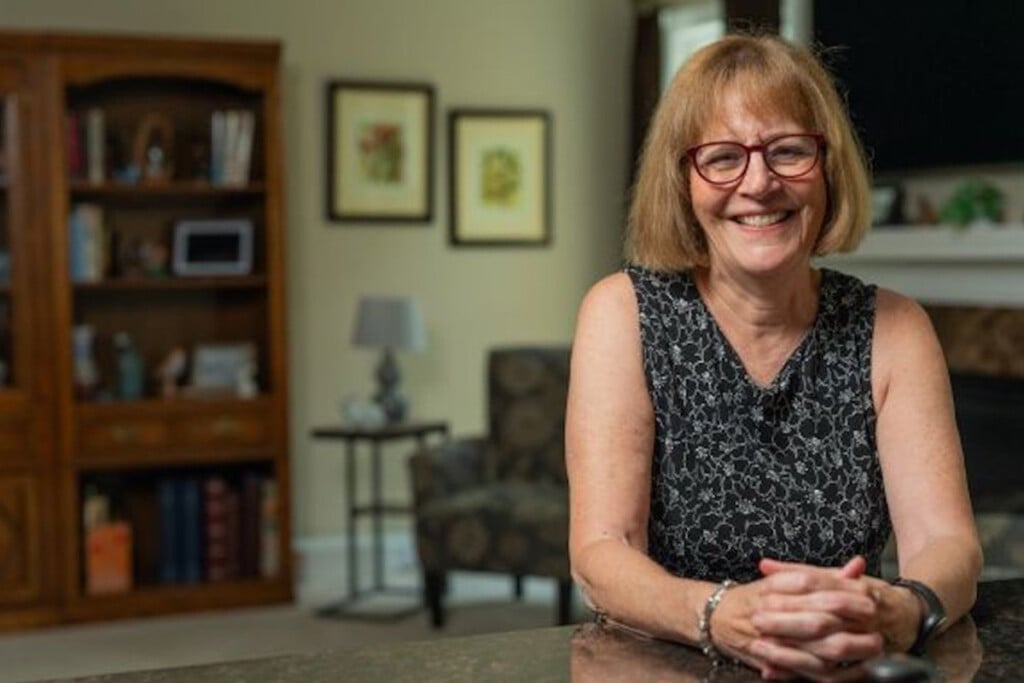
It began with occasional ear pain. A few years later, Penny noticed that the back of her mouth would sometimes feel numb while brushing her teeth. Or she’d touch her lip, and she wouldn’t feel anything.
She knew something odd was going on, but none of these issues seemed urgent. Plus, life was busy. She was a licensed social worker and an adjunct at Seton Hall University—not to mention her passion for pickleball and shopping.
She also helped administer support groups for rare medical disorders at Saint Clare’s Self-Help Group Clearinghouse. She remembers her boss talking about setting up a national support group for trigeminal neuralgia. Having never heard of this condition, Penny asked what it was. “Nothing you’d ever want,” her boss replied. As she learned about this chronic nerve disorder that causes sudden stabbing or shock-like facial pain, she thought, “Well, I’m glad I don’t have that.”
When Nuisance Pain Becomes Debilitating
Unaware she was, in fact, experiencing the first signs of this condition, Penny decided to talk to her dentist. Her symptoms were showing up more frequently, and the numbness was turning into more of a dull ache. She thought it was TMJ, but her dentist quickly ruled that out.
The ache continued to come and go. Then things took a turn for the worse four years ago. Penny went on a trip to Block Island with some friends. All of a sudden, she found herself in unbearable pain. “I couldn’t eat or drink. I couldn’t sleep. I couldn’t talk,” Penny said. “It felt like electric shocks. The pain was excruciating.”
She returned to the dentist, who delivered the diagnosis she didn’t want to hear: trigeminal neuralgia. Unable to withstand the pain, she ended up in the emergency room at Morristown Medical Center. There wasn’t much the ER staff could do for her. They administered a shot of valium and told her to see a specialist.
Temporary Relief from a Medication Cocktail
Her primary doctor prescribed gabapentin and referred her to a neurologist. A second medication—tramadol—was added to the mix. While a cocktail of medications is common for trigeminal neuralgia, Penny had a bad reaction to the tramadol. She switched to duloxetine.
After an uncomfortable adjustment period, this cocktail seemed to work for a while. “Occasionally, I would get a spike, but nothing too bad,” she said. She was able to go back to work.
Then, in October of 2025, her symptoms came raging back. “I’d fall to the floor in agonizing pain,” Penny said. “The shock-like sensations would last for hours. My husband, Ron, would just hold me and remind me to keep breathing.”
By this point, Penny had become the co-leader of the New Jersey trigeminal neuralgia support group for the Facial Pain Association. She knew that most people with this condition end up undergoing some type of surgery, but many people reported side effects like deafness or troubling walking. Now, however, her fear of the pain never going away outweighed her fear of having surgery. “I just couldn’t take it anymore,” she said.
Overcoming the Fear of Surgery
Penny scheduled an appointment with Dr. Gary Heir, an orofacial pain expert at Rutgers School of Dental Medicine. She had seen Dr. Heir earlier in the year for a general consult and imaging. The MRI revealed a clear vascular compression of the trigeminal nerve, with multiple blood vessels compressing the nerve on the right side. Dr. Heir explained this made her a candidate for a microvascular decompression (MVD) – a minimally invasive procedure that relieves pressure on the trigeminal nerve caused by a nearby blood vessel. At the time, she was still feeling “good enough” on her medication cocktail, but that was no longer the case.
Dr. Heir again recommended an MVD. This time, he also recommended a neurosurgeon – Dr. Stephen Johnson of Atlantic Brain and Spine (ABS), a trigeminal neuralgia specialist and expert in MVDs. Dr. Heir picked up the phone and called Dr. Johnson immediately. Penny met with him just a few days later.
“Dr. Johnson is a peach,” Penny said. “He is so kind and compassionate, and he really listened to me. I never felt pressure to have surgery. He gave me space, and he was there for me when I was ready.”
Instant Relief, Zero Complications, and an Audible Bonus
In February of 2026, Dr. Johnson performed a right microvascular decompression. An audiologist was present during the procedure to ensure none of the nerves that affect hearing were impacted. As it turns out, Penny’s fear of going deaf didn’t come to fruition. In fact, the audiologist confirmed improvement of hearing in her right ear—an unexpected bonus.

Stephen A. Johnson, MD, is a neurosurgeon specializing in facial pain and spasm, and trigeminal neuralgia at Atlantic Brain and Spine.
“Trigeminal neuralgia can cause truly debilitating pain,” said Dr. Johnson. “Penny’s imaging showed MVD was the right option for her, and I was so happy to be able to give her the relief she deserves so she can go back to enjoying the simple things in life.”
Penny spent one night in the ICU. “Everyone was so sweet, from Dr. Johnson’s scheduler to the ICU overnight staff,” she said. “I was really cold after the procedure, and they just kept layering warm blankets over me.”
The next morning, Dr. Johnson walked into Penny’s room and said, “You can get up and go.” Penny was both shocked and pleased. After a quick visit with both physical and occupational therapy, she was cleared to return home. Aside from feeling very tired during recovery (which she had been warned about by her support group), she felt great—no pain! “I just sort of sprang back,” she said.
Pain-free Pickleball, Shopping, and Loving Life
At her two-week follow-up, Dr. Johnson told Penny she could return to all activities. Still feeling fatigued, she decided to ease back into life. A few weeks later, she called her pickleball coach and scheduled some time to get back on the court. Penny gradually increased her play time, slowly building up her stamina. And, of course, the shopping never stopped. Penny simply switched from in-store to online shopping during her recovery, much to her husband’s chagrin!

Penny and husband, Ron, are back in the swing on the pickleball court following successful treatment of trigeminal neuralgia.
She was also astonished at how small her scar was from the procedure. “I saw so many awful pictures of huge MVD scars stapled shut,” Penny said. “But Dr. Johnson was amazing. The incision is so tiny. You can barely see it!”
Today, Penny has some lingering numbness on the side of her face and the tip of her tongue, but she is hopeful those will resolve with more time. What’s most important to her is being pain-free and back to living her life.
“I can eat. I can drink. I can play pickleball. I can work.” Penny said. “I wouldn’t think twice about referring anyone to Dr. Johnson. He even offered a room for our support group to meet and said he would come speak to all of us. He is truly wonderful.”

Penny resumed her normal activities and is back in action on the court!
Atlantic Brain and Spine is a New Jersey neurosurgical practice specializing in complex brain, spine, and neurovascular conditions, serving communities across northern and central New Jersey with offices in Morristown, Summit, New Brunswick, Manalapan and Edison, New Jersey.
Learn more at AtlanticBrainAndSpine.org or call 973-993-7100.
FAQs
What is trigeminal neuralgia?
Trigeminal neuralgia is caused by compression or irritation of the trigeminal nerve, resulting in sudden, intense facial pain—often described as stabbing or electric-shock-like. Episodes may be triggered by everyday activities such as eating, talking, brushing your teeth, or exposure to wind. The pain typically affects one side of the face and may worsen over time if left untreated.
What causes trigeminal neuralgia?
Common causes of trigeminal neuralgia include:
- A blood vessel pressing on the trigeminal nerve near the brainstem (neurovascular compression)
- Multiple sclerosis or other diseases that damage the myelin sheath
- Tumors compressing or irritating the nerve
- Trauma or injury to the face or skull
- Rare vascular abnormalities like arteriovenous malformations
How is trigeminal neuralgia diagnosed?
If trigeminal neuralgia is suspected, your physician will take a detailed health history and perform a physical examination, along with a prescribed imaging study, such as an MRI, to confirm the diagnosis and rule out other causes.
What treatments are available?
There are various treatment options available; your physician will work with you to determine which procedures will yield optimal outcomes.
Advanced Neurosurgical Options Include:
- Microvascular Decompression (MVD): A minimally invasive procedure that repositions blood vessels to relieve nerve compression and resolve pain caused by conditions like trigeminal neuralgia, glossopharyngeal neuralgia, and hemifacial spasm.
- Complex Skull Base Surgery: Endoscopic and microsurgical techniques using intraoperative navigation and neurophysiological monitoring to precisely and safely manage tumors, vascular anomalies, and structural lesions affecting cranial nerves.
Minimally Invasive Pain Management Procedures Include:
- Percutaneous Rhizotomy: Targeted treatments such as glycerol injections, radiofrequency thermocoagulation, or balloon compression for rapid relief.
- Peripheral Nerve Stimulator Placement: Implantation of small electrodes to modulate nerve activity and reduce pain, typically used when other interventions have not been successful.
Innovative, Non-Surgical Solutions Include:
- Stereotactic Radiosurgery (CyberKnife® and TrueBeam™): Non-invasive, focused radiation therapy that disrupts pain pathways without an incision.
- Medication Management: Anticonvulsants, antispasmodics, and Botox® injections can help control symptoms. While ABS does not manage medications directly, we coordinate care with referring neurologists and pain specialists.
What type of specialist treats trigeminal neuralgia?
A neurosurgeon specializing in trigeminal neuralgia can diagnose and treat the condition.
Are there any local specialists near me in New Jersey?
Atlantic Brain and Spine has a coordinated team of renowned physicians and clinicians, including Fabio A. Frisoli, MD; Ronald P. Benitez, MD; Stephen A. Johnson, MD; and Yaron A. Moshel, MD, PhD.
How can I make an appointment for a consultation?
Schedule an appointment with an Atlantic Brain and Spine neurosurgeon to explore your options for long-term relief from facial pain.