
The Coast Is Clear
Protecting the shoreline and adjacent communities is a clear priority, that is, for the now 65-year-old American Littoral Society.
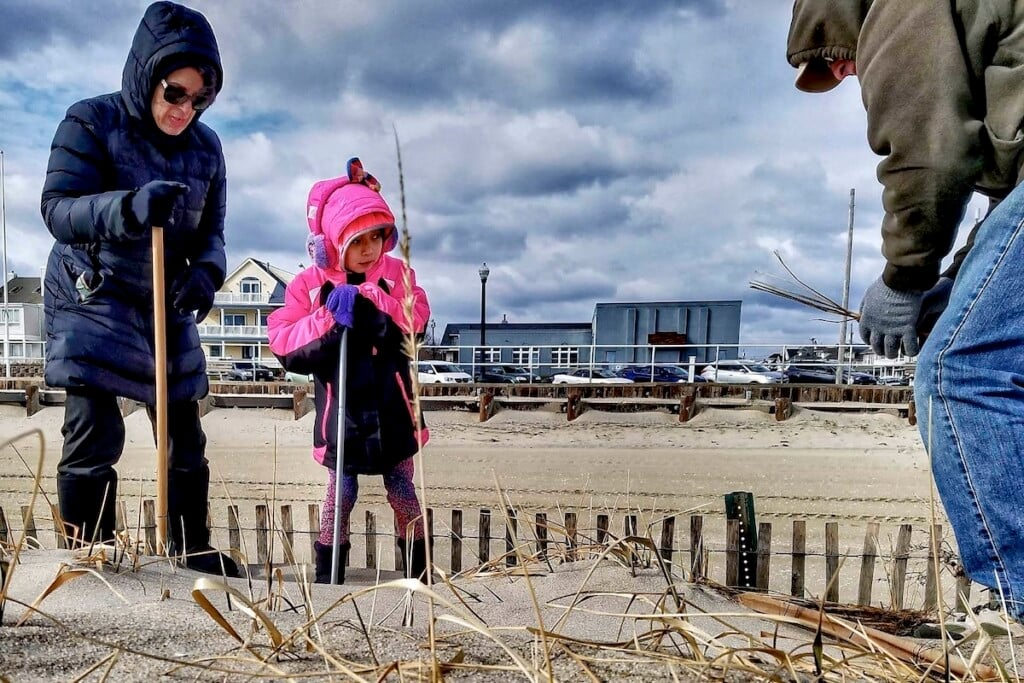
New Jersey, of course, is the Garden State. “But sometimes I think we should call it the Coastal State,” says Danielle McCulloch.
She’s the executive director of the Highlands-based American Littoral Society, and she has some arguments. “Eighty percent of our counties are coastal counties,” she explains. “And even the ones that aren’t coastal are hugely impacted by the Delaware River, the Raritan Bay, our back bays, our marshlands—every part of New Jersey is impacted by water.”
“Littoral” comes from the French word for “coastline,” and the term encompasses any place where a large body of water meets the shore. Founded in 1961 by Lionel A. Walford of the Sandy Hook Marine Lab to bridge the gap in understanding between science and the public, the American Littoral Society is celebrating 65 years of studying, protecting and restoring marine life and habitat. The impact it’s made on Monmouth and the rest of the state has been extraordinary, as has its growth.
“In 1961, we were just an offshoot of NOAA [National Oceanic and Atmospheric Administration], promoting messaging around ocean and fish issues,” says McCulloch. “Now we’re independent, locally focused but broadly working—a lot of the coastal policy you see in New Jersey is something we had some kind of influence on. We extend outside the state as well.” Indeed, it’s worth noting that the organization is not called the New Jersey Littoral Society; it has done projects in New York, Florida and the Mid-Atlantic states, and many of its initiatives have had national impact.
The group has been on the front lines of many of Monmouth’s “coastal resilience” projects, which focus on making sure both ecosystems and communities can stand up to storms, flooding and rough waves. “That’s what sets us apart from other organizations,” says McCulloch. “We’re the doers. We’re involved in lots of research and policy work, but our organization is actively implementing coastal resilience projects and solutions on the ground. We use nature itself and nature-based solutions to address modern coastal climate issues in ways that benefit fish, wildlife, people and communities.” These projects include ecosystem restorations to create “living shorelines,” which prevent flooding and coastal erosion.
Few are more “on the ground” than Alek Modjeski, known in the organization as “Capt. Al,” who is the American Littoral Society’s Habitat Restoration Program director. He spends most of his time in the field. “We build out habitats,” he explains. “We create living coastlines by building out beaches with sand, reintroducing native plants, building up marsh sills, creating oyster reefs—and these restorations can take a beating. They can stand up to multiple storms a year. It revitalizes the ecosystem, it brings back animal species and it prevents flooding.”
Modjeski’s focus is on the Shark River area. “We did a restoration on South Riverside Avenue in Neptune, for instance. It was 2,050-linear-foot area; it was eroding fast and it was causing a lot of flooding,” he says. “We came in, built it out, added vegetation and sand. There hasn’t been any flooding since. Old-school methods like bulkheading don’t work. These solutions do.”
The nation, says McCulloch, “developed our coastlines fast, before we really understood how these communities would be impacted by the natural systems we developed them on. Superstorm Sandy was a case study for how that made us vulnerable. But now we have more information, and we can use it. We can harness nature, which grows and adapts with the changing sea levels and climate.”
Though the American Littoral Society and people like Modjeski plan and spearhead these projects, they rely on volunteers to help create them—and that’s the other secret to their success. “The first thing we do is get volunteers involved,” Modjeski says. “They help us plant, help us build. And then, afterward, those same people walk their dogs on that restoration every day. They keep an eye on it and tell us what’s going on. They become the stewards of that restoration.” He adds: “We recently had a huge storm come through the Shark River area. Afterward, people there were sending me pictures of the restorations, saying, ‘Look, it worked. It got a little beat up, but the project did its job.’ There’s nothing more rewarding than that.”
Some volunteers have been working with Modjeski on conservation and restoration projects, be they planting or tagging wildlife, for more than 10 years. “At one point during the South Riverside build, we had the whole community on fiddler-crab watch, because they’re an indicator species—if you have fiddler crabs, you have a healthy marsh,” he says. “And when they started thriving, we knew.”
It’s not only fiddler crabs that are thriving in Neptune. Thanks to the society’s efforts, both horseshoe crabs and bait fish are back, and they draw back herons and other wading birds. The ecosystem is coming back to life and residential areas are flooding less frequently—a win-win. “Our communities are thinking regionally now,” says Modjeski. “This past June, we received a planning grant through the county and state called Resilient NJ. And we brought together the five municipalities that make up the Shark River—Wall, Neptune, Neptune City, Belmar and Avon-by-the-Sea—and brought back the Shark River Round Table to plan for the future together. That hasn’t happened in over 25 years.”
Says McCulloch: “Monmouth is a great place to look at that interaction between human development and a very dynamic, changing shoreline in the face of sea-level rise and climate change. We are a case study for the country at large, which is why we can be so useful advising on other estuaries. Coastal issues aren’t niche. We impact the rest of the state and the rest of America.”
“Things are finally getting done in the world of coastal conservation,” Modjeski insists. “It’s making people pay attention, come alive and try to help. Everyone’s realizing that there’s hope.”