
How To Protect Yourself From The Flu
Want to stay well during the season of sickness? Here’s how to keep yourself and your family healthy.
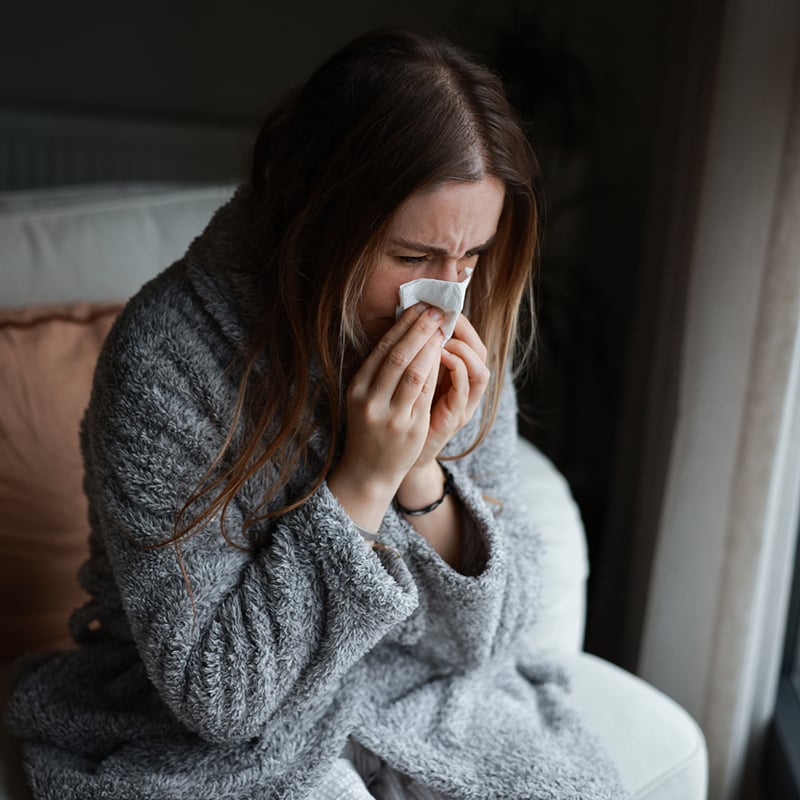
As you return to work, doesn’t it feel like everyone is talking about how they or a loved one has been sick? You’re not imagining it.
Cases of influenza, or flu, have been high across the country, but particularly in this area. New York State just reported its highest number of flu hospitalizations recorded in a single week, and the Centers for Disease Control and Prevention (CDC) has classified flu activity in New Jersey as “very high.”
According to Dmitry Volfson, D.O., the chief medical officer at CityMD urgent care, which has locations in Paramus, Ramsey, Northvale, Elmwood Park and Teterboro, “Flu cases always peak during this time of the year because of the cold weather and people gathering together for the holidays.” Why has this year seemed more severe? The doctor explains, “A mutated variant of Influenza A, called ‘subclade K,’ has been the dominant strain. Since the variant emerged after this year’s flu vaccine was developed, the flu shot has not been a great match for it, making it less effective. As a result, flu cases and hospitalizations have spiked here locally and across the country.”
How do you keep yourself and your family safe? Here are some tips.
Keep it clean. Just because this tip is simple doesn’t mean it isn’t vital. Per the CDC, one of the most important was to stop the spread of flu is to wash your hands regularly with soap and warm water, scrubbing for at least 20 seconds. If soap and water aren’t available, reach for alcohol-based hand sanitizer. To further avoid spreading germs, do your best not to touch your eyes, nose and mouth in public places. In addition, wipe down and clean frequently-touched surfaces—desks, doorknobs, countertops, handrails and phones are all good targets.
Avoid contact. You should do your best to stay away from sick people when you’re healthy, and do your best to stay away from healthy people when you’re sick. If you or a loved one is feeling under the weather, it’s best to err on the side of caution and call out from work, skip that social event or keep your child home from school. Says Dr. Volfson, “If you test positive for the flu, stay home until you are fever free for at least 24 hours to avoid exposing others.” Consider masking if you need to run to the supermarket or a pharmacy, which will reduce the spread of viruses to others. Dr. Volfson also urges you to take further steps if your symptoms linger. “Do not ignore persistent or worsening symptoms. If your fever lingers for more than 5 days, or if you experience any shortness of breath or chest pain, it is important to get evaluated by a doctor. Those symptoms can be a sign of one of the more serious complications of the flu, such as pneumonia.”
Stick to healthy habits. Per the American Red Cross, practicing good habits can boost your body’s resistance to infection. Eating a balanced diet, drinking fluids, daily exercise, managing stress and getting enough sleep at night will keep you and your immune system in fighting shape. In the dry winter, make sure you’re also keeping hand lotion and lip balm close at hand to avoid cracking—your skin is your first line of defense against pathogens.
Get vaccinated. Though this year’s flu shot isn’t an ideal match for the subclade K variant, it will still offer some protection, says Dr. Volfson. “The flu vaccine is still recommended. It still decreases your chance of getting the flu, and it will also decrease the severity of symptoms if someone does contract it.” If you haven’t opted for it yet, it isn’t too late. “Since the flu season can linger into March and April, it is not too late to get the shot,” says the doctor. If you don’t have time to swing by your primary care doctor, many local and chain pharmacies and urgent cares offer flu shots, in addition to COVID-19 vaccine boosters.
Want more ways to stay healthy this January, and all year long? Check out the newest issue of BERGEN magazine.