
Is At-Home Testing For You?
Today, getting personal medical news is easier and more convenient than ever. But know what that news can actually reveal—and what it can’t.
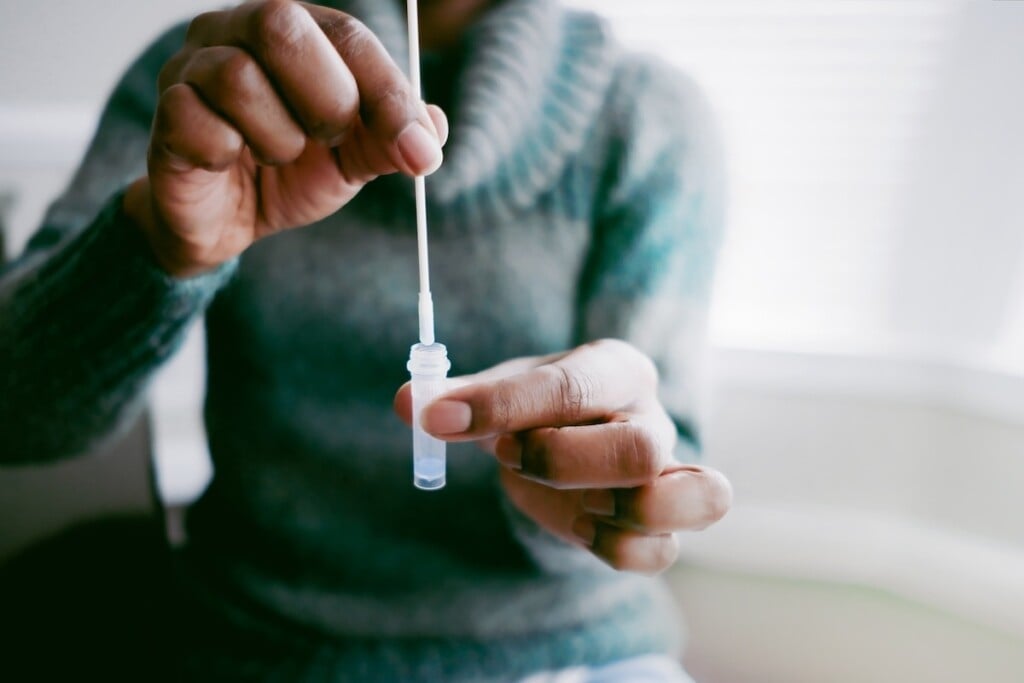
In 2026, it’s rare to find a person who hasn’t taken an at-home COVID-19 test. Such kits were household necessities at the height of the pandemic; you likely have a few in your medicine cabinet right now—and use them. We all want to know, after all, if the congestion and fatigue we’re feeling indicate just a touch of late-spring allergies or a reason to stay home from work or school. And you can pick up a similar testing kit that will tell you if you have the flu.
It’s not just for upper-respiratory woes. Browse a local pharmacy today, and you’ll find at-home tests that measure blood sugar, check for urinary tract infections (UTIs) and flag if one has entered menopause. Turn to online storefronts and you’ll find even more options—checking for Lyme’s disease or low vitamin-D levels, for example. And the trend is growing. Last year, the Food & Drug Administration (FDA) approved an at-home test for human papillomavirus (HPV), the cause of most cervical cancer and the virus screened for in a Pap smear. Still more at-home tests can be ordered by doctors—patients can take a sample of stool or urine, for example, at home and send it to a lab themselves.
The appeal of such tests for the consumer is obvious. They’re convenient, as they don’t require the time and travel of a trip to a primary care physician or urgent care, and they’re usually fast, so there’s no waiting for results. But MONMOUTH wondered what doctors think— of the home HPV tests, for instance.
“The big positive is access,” says Soma Mandal, M.D., medical director of women’s health at Hackensack Meridian Health’s Jersey Shore University Medical Center, who practices in Farmingdale. “For women who avoid getting checked out because of discomfort, time constraints or difficulty getting to appointments, this could significantly increase screening rates.”
But, she adds, it’s not without downsides. “It’s still a screening, not a full gynecologic exam. A positive result requires follow-up, and that’s critical.”
Jonathan Okun, M.D., a family practice physician with Atlantic Health in nearby Old Bridge, has a similar sentiment. “With something like HPV, a positive result means that you need long-term care. That person needs someone to treat them, which can’t happen at home.”
A further chat with both doctors reminded us that everything in medicine involves trade-offs. There was, for example, some good news about home testing— and some bad.
• The good. For the right patients, Dr. Mandal sees a lot of value in over-the-counter continuous glucose monitors, or CGMs. These wearable devices measure your blood sugar 24 hours a day without the need for finger pricks; they’re often attached to a smartphone app. “They’re incredibly useful for people with diabetes who want to see patterns, catch lows and understand how food and activity affect their glucose,” she says. “For people without diabetes who are curious about metabolic health, I think they can be educational, as long as expectations are realistic—remember that it’s not a diagnostic tool.”
Those home COVID-19 and flu tests, too, win a thumbs-up from both doctors. Dr. Okun says: “My patients use them when they have an upper-respiratory symptom and, if the test comes back positive, they reach out and make an appointment—which we can make via telehealth to keep them isolated.”
“I generally support these tests,” adds Dr. Mandal. “Many patients use them before they even call the office, which can make the visit more efficient—we’re starting with some information already. They’re fast, they help people make timely decisions about treatment and they can keep medically vulnerable people out of waiting rooms.”
It should also be noted that, per experts, these tests can have a high false-negative rate, and most doctors want to see a negative test repeated a few times over a few days before they give you the “all-clear.” Doctors use polymerase chain reaction (PCR) tests when checking for these viruses; they’re accurate 90 percent of the time.
“Remember that timing matters,” Dr. Mandal says. “Testing too early can miss an infection, and a negative result doesn’t rule out COVID or flu if you have classic symptoms.”
• The bad. One consistent problem Dr. Mandal sees is that at-home testing can cause long-term anxiety and worry. She cites an at-home test that can be used in lieu of a colonoscopy; it must be ordered by a medical professional and involves a person taking a stool sample at home and sending it to a lab. (You may have seen it advertised as Cologuard.) It checks for abnormal cells and the presence of blood, and she calls it “an important addition to a provider’s toolkit, particularly for average-risk patients,” as “not everyone is ready for a colonoscopy. Some patients are anxious about sedation, worried about the prep or unable to take time off work. Having this option removes a barrier.”
But there’s a reason a colonoscopy remains the gold standard—for one, a doctor can remove a polyp during the procedure, or take a biopsy if something seems suspect. “The test is a screening tool, not a diagnostic test,” says Dr. Mandal. “If a stool test comes back positive, it requires a follow-up colonoscopy, which the patient then has to schedule. There are also false positives, in which after the colonoscopy nothing significant is found. So the test can create anxiety.”
Dr. Okun concurs: “The false positives can feel like a mess to deal with, because now the patient needs to wait for an appointment, and there are often few gastroenterologists for a large population. If it’s a choice between never going or starting with this test, we always prefer the latter—but sometimes it’s better to just make the gastroenterologist appointment.”
A similar problem arises with direct-to-consumer genetic testing through services like 23andMe. “This type of genetic testing for complex diseases is the category I caution people about most,” says Dr. Mandal. “It tells you your ‘risk’ for things like diabetes, heart disease or Alzheimer’s. But for most common conditions, genetics is just one piece of a very complicated puzzle.” These tests also have a very high false-positive rate. She says, “One study found that 40 percent of genetic variants identified on direct-to-consumer platforms were technically false positives when re-checked in clinical labs.”
Say, for instance, one of these tests comes back positive for genes related to Alzheimer’s disease. That doesn’t mean a person will definitely develop it. “People panic,” says Dr. Okun, “even though most who carry such genes don’t develop Alzheimer’s. In addition, if someone has the gene, all they can do is watch for early signs. The patient feels like a ticking time bomb—maybe for no reason.” The doctor adds, “It’s not a very constructive way to live.”
The lesson Dr. Mandal takes from the trend? “Healthcare is shifting. Patients are no longer passive recipients of information; they’re active participants. It’s not something to fear, but it’s something to guide. A lab value on its own doesn’t tell a story—it’s the context, the history, the exam and the conversation that make it meaningful. The physician’s role becomes even more important, not less.”
Concludes Dr. Okun: “The key to long-term health is a longstanding, trusting relationship between patient and provider. A one-off test isn’t going to replace a visit to your primary care doctor.”