
Is At-Home Testing For You?
Today, getting personal medical news is easier and more convenient than ever. But know what that news can actually reveal—and what it can’t.
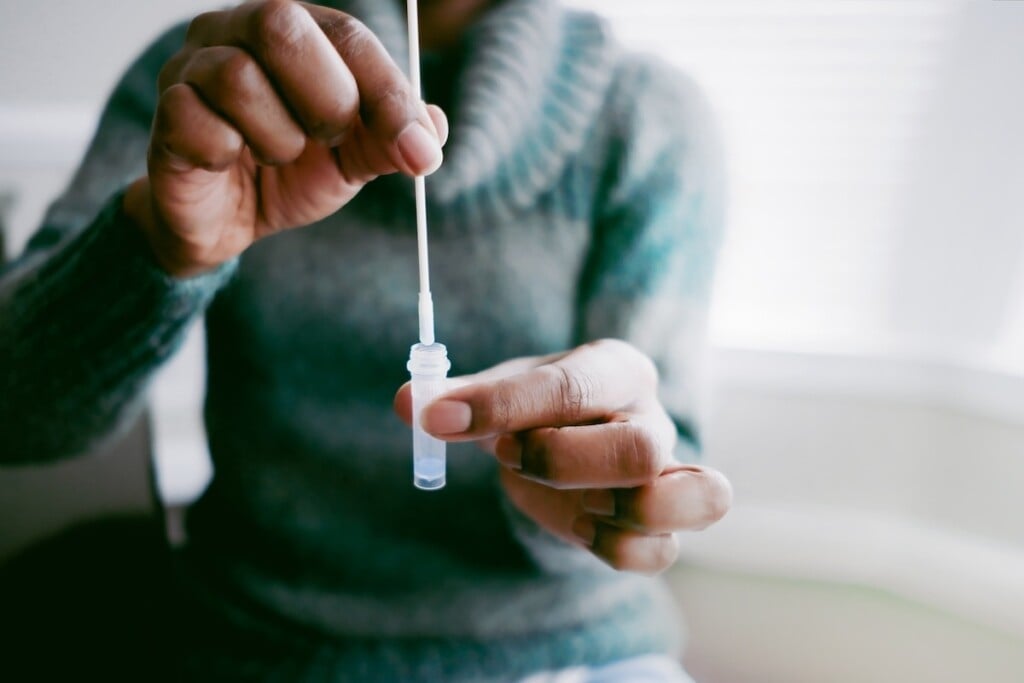
In 2026, it’s rare to find a person who hasn’t taken an at-home COVID-19 test. Such kits were household necessities at the height of the pandemic; you likely have a few in your medicine cabinet right now—and use them. We all want to know, after all, if the congestion and fatigue we’re feeling indicate just a touch of late-spring allergies or a reason to stay home from work or school. And you can pick up a similar testing kit that will tell you if you have the flu.
It’s not just for upper-respiratory woes. Browse a local pharmacy today, and you’ll find at-home tests that measure blood sugar, check for urinary tract infections (UTIs) and flag if one has entered menopause. Turn to online storefronts and you’ll find even more options—checking for Lyme’s disease or low vitamin-D levels, for example. And the trend is growing. Last year, the Food & Drug Administration (FDA) approved an at-home test for human papillomavirus (HPV), the cause of most cervical cancer and the virus screened for in a Pap smear. Still more at-home tests can be ordered by doctors—patients can take a sample of stool or urine, for example, at home and send it to a lab themselves.
The appeal of such tests for the consumer is obvious. They’re convenient, as they don’t require the time and travel of a trip to a primary care physician or urgent care, and they’re usually fast, so there’s no waiting for results. But MORRIS & ESSEX wondered what a doctor thinks—of the home HPV tests, for instance. “Accessibility of care is always key,” says Linda Hong, D.O., medical director of the Department of Family Medicine at Morristown Medical Center. “It’s vital to preventative medicine. In these counties, we have a lot of access to doctors and providers. This new HPV test opens doors for people in areas that don’t.”
She adds: “There are also people who struggle getting pelvic exams because they’re physically uncomfortable or painful, or because of a history of sexual trauma. If this test helps those people access preventative healthcare, then it’s a good thing.”
A further chat with the doctor reminded us that everything in medicine involves trade-offs. She had, for example, some good news about home testing— and some bad.
• The good. A new option Dr. Hong likes? “Continuous glucose monitors, or CGMs,” she says. “For people who are diabetic, watching their blood sugar or on a medication that causes a risk of sugar dropping, it’s super helpful.” These wearable devices measure your blood sugar 24 hours a day with a reduced need for finger pricks; they’re often attached to a smartphone app. “There’s a lot of value in determining sugar highs and lows and monitoring a glycemic index in real time, especially if someone is working on a lifestyle and monitoring what they eat,” says the doctor. “Patients have success with it.”
Those home COVID-19 and flu tests, too, win a thumbs-up from the doctor. “People use them when they’re seeing symptoms, and use the positive result as a way to know they need care,” Dr. Hong says. “On the provider’s side, we know to opt for a virtual appointment to stop the spread of germs.” These tests have a fairly low false-positive rate and, if you test positive, you can be confident that you’re contagious. “It can also be really good for our pediatric population and families,” she adds. “If one child gets sick, usually the rest of the family does too. Even if they’re not showing symptoms, parents can test their other children, keep them home if it’s positive and reach out to us for the next steps.”
It should also be noted that, per experts, the tests can have a high false-negative rate, and most doctors want to see a negative test repeated a few times over a few days before they give you the “all-clear.” Doctors use polymerase chain reaction (PCR) tests when checking for these viruses; they’re accurate 90 percent of the time.
Dr. Hong adds one more tip: “There are several different types of flu tests out there, and the timing of when you should take it is different for each one. Knowing which one you’re getting is key.”
• The bad. One consistent problem Dr. Hong sees is that at-home testing can cause long-term anxiety and worry. She cites an at-home test that can be used in lieu of a colonoscopy; it must be ordered by a medical professional and involves a person taking a stool sample at home and sending it to a lab. It checks for abnormal cells and the presence of blood. “On the one hand, I’ve spent years struggling to convince some patients to schedule a colonoscopy,” says Dr. Hong. “If they’re more willing to do this, I’ll take it. But there’s a reason it’s not the gold standard. During a colonoscopy, if the doctor sees something abnormal.” The doctor also can remove a noncancerous polyp during the procedure. The doctor continues, “The at-home test only flags that something is abnormal; it doesn’t identify what. Often, it’s a noncancerous polyp or hemorrhoid.” The patient then needs to schedule a gastroenterologist visit and a colonoscopy, which could take months—all while worrying about colon cancer.
A similar problem arises with direct-to-consumer genetic testing through services like 23andMe. “You can get a lot of false positives,” the doctor says. “And those positive tests without real confirmation or guidance from a provider can cause a lot of fear and uncertainty.” Say, for instance, one of these tests comes back positive for genes related to Alzheimer’s disease. That doesn’t mean a person will definitely develop it. A positive finding for “Alzheimer’s genes” shows only part of what’s involved in contracting the condition. Other biomarkers and genes are still being studied and aren’t fully understood yet.
Dr. Hong returns to that HPV test. “I do worry that it will stop people from seeking out a gynecologist altogether,” she says. “Just because an HPV test is negative doesn’t mean that there isn’t something else going on in that region that needs treating. You might not know you have anything abnormal going on, but your provider will.”
As powerful as these at-home tests are, they can’t replace a visit to your primary care doctor. “Speaking to your own clinician is always important,” Dr. Hong stresses. “Information without guidance, or with only the guidance of the internet, can be detrimental to your health. Take the test, sure, but follow up with us—it’s what we’re here for.”