
The Kids Aren’t Alright
There's a growing mental health crisis among students today—in Bergen County and across the land.
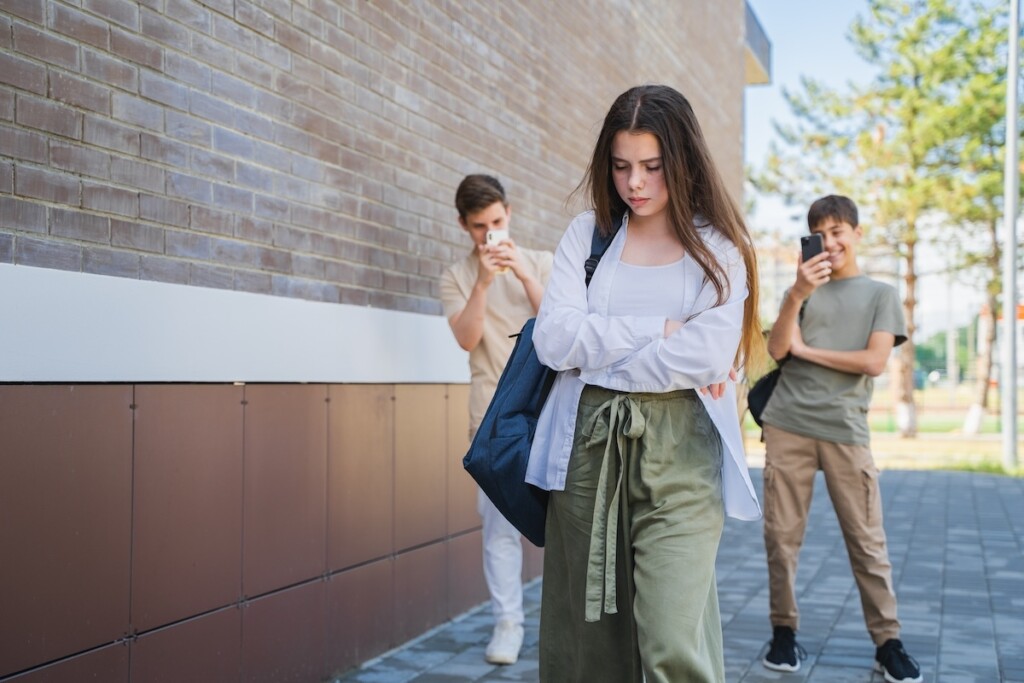
She was, by all accounts, smart, artistically talented and kind. According to an email from a group of concerned parents to a local newspaper, she also was the victim of relentless bullying, and on May 20 of this year, the 16-year-old, a resident of Little Ferry and a sophomore at Ridgefield Park High School, took her own life. As friends and family mourned and school administrators searched for answers, Little Ferry officials released a statement announcing that they were working with “schools, public safety ofhicials and community partners to understand what steps can be taken to help prevent something like this from happening again.”
Not all students are bullied, of course, and not all bullying victims consider suicide. But according to the American Psychological Association (APA), students—in Bergen and elsewhere—are suffering an unprecedented mental health crisis. A 2022 study in the journal Clinical Psychological Science revealed that, between 2010 and 2015, the number of teens who said they felt “useless and joyless” increased by 33 percent, and the number who committed suicide rose by 31 percent. A recent report from the Centers for Disease Control and Prevention (CDC) noted that, between 2011 and 2021, 30 percent of high school girls and 41 percent of LGBTQ+ teens had considered suicide. And in May of this year, The New York Times reported that visits to doctors for anxiety among children rose by more than 250 percent over the past decade.
Jennifer Hughes is CEO of the nonprofit National Alliance on Mental Illness of New Jersey (NAMIN]J), which has a dedicated Bergen County chapter and provides support, education and advocacy for people dealing with mental illness, in schools and the community at large. As evidence of a mental health crisis among students, she cites the statistic that “more than one in seven youths has a mental health condition like anxiety and depression, but only half are receiving mental health services.”
THE ANXIOUS GENERATION
In fact, according to those who work closely with students—school counselors and therapists, for example—anxiety is by far the most common mental health challenge faced by young people, in Bergen County and across the country. “I’ve been an educator for 27 years, and the thing that’s become obvious somewhere in the last 10 years is that our kids are really anxious in a way that they never were before,” says Michael Biggan, director of high school education in the Ramsey School District. Anxiety among students isn’t just increasing, notes Kristy Ritvalsky, deputy director of Rutgers University’s Center for Comprehensive School Mental Health (CCSMH), “it’s appearing—along with loneliness, depression and even suicide attempts—at younger and younger ages.”
Why? She says it’s “multifactorial,” and one of those factors, especially in communities where parents place high value on academic success, is the increased pressure to get into a good college. In a 2025 survey from The Princeton Review, an education services company, 73 percent of students and parents reported “high” or “very high” stress over the admissions process—the highest percentage since the survey was instituted in 2002. In fact, notes Biggan, parents may be at least partially responsible for that stress. “I’think a lot of it is anxious parenting,” he says. “I’m not blaming our parents, because we have wonderful parents—it’s more like they’re loving their kids to death.” Parents themselves feel the pressure to help their children succeed, and Biggan says kids internalize that pressure. And it’s not just parents: The APA cites what it calls a “toxic achievement culture,” inside and outside our schools, that elevates achievement—in the form of a top college, a prestigious, high-paying job and consequent material success—above everything else, including happiness and personal satisfaction.
Students aren’t just being pressured about academic success; they’re getting the message that they need to succeed in extracurriculars as well. And that leads to increased anxiety about time management, says Raffaela Bartels, a therapeutic school counselor at River Dell High School. “A good percentage of students do a sport or are involved in a club or some other school activity,” she notes. “Trying to find time for homework and just time for themselves is another pressure they face.”
And then there’s COVID. The pandemic is over, but the mental health challenges it produced linger on. Jennifer Zimmermann, student assistance counselor at Pascack Hills High School in Montvale, says that “when COVID hit, I saw an increase in mental health challenges; COVID changed everything.” A 2021 CDC survey, for instance, found that social isolation, economic hardship, online learning difhiculties and increased family conflict, all resulting from the pandemic, likely contributed to those challenges.
But most mental health professionals and professional organizations, including the CDC, agree that mental health problems among students were already increasing before COVID. “Anxiety, loneliness and depression existed among students long before the pandemic,” says Ritvalsky. “The pandemic just made them impossible to ignore.” In fact, according to the CDC, there were “significant increases” in mental health challenges among young people between 2009 and 2019. Reported feelings of sadness or hopelessness, for instance, grew from 26 percent to 36.7 percent during that time, and the number of young people considering suicide rose from 13.8 percent to 18.8 percent.
What particularly distinguished that pre-pandemic decade may point to the No. 1 cause of student anxiety: the rise of social media and, adds Biggan, “especially social media on phones.” Social relationships and social standing have always been important to teenagers and preteens. The APA notes that, at around the age of 10, children’s brains change in a way that increases the importance they place on gaining peer attention and approval. But before the rise of social media, they could largely escape that pressure to belong once they got home. Now it dogs them 24/7. “They can pick up their phones and see who’s being invited where and who’s being excluded,” says Zimmermann. She also notes that “kids hide behind those screens and say things they would never say in front of a person”—a phenomenon that can progress fairly quickly to cyberbullying.
Emma, a 15-year-old whose family lives in Midland Park, says that social media helps her “feel close to my friends” but admits that it also makes her “sometimes feel bad about myself—about the way I look and about the things I’m not doing that other people are doing.” Those carefully curated posts and the perfect (often Al-enhanced) bodies showcased on TikTok and other platforms can exact a heavy toll on children’s self-image, even when their parents explain, as Emma’s have, that social media makes it easy to exaggerate, and even lie about, one’s purportedly wonderful and exciting life.
Social media, says Bryan Connelly, director of the student mental health program NJ4S Bergen (New Jersey Statewide Student Support Services), can also deprive children of essential social and coping skills. “It makes it particularly challenging to learn how to make friends in a lasting way,” he says—a deficiency that can leave kids feeling adrift and yes, anxious.
HOW SCHOOLS ARE HELPING
Increasingly, we’re asking our schools to act as a bulwark against the mental health challenges our students are facing, and schools in Bergen are rising to the challenge. It makes sense for them to assume at least some of the burden, notes NAMIN]J’s Hughes, since kids spend some six hours a day, five days a week, at school. Still, notes Ritvalsky, “schools are being asked to do more with less.” Federal money to support student mental health flowed to schools during and just after COVID, but for the most part, those funds are no longer available. The Ramsey School District, for instance, used federal funds to partner with Gaggle, a student teletherapy service, after it became clear that waiting lists for in-person therapy were prohibitively long. Now that the funds are no longer available, the district has scaled back its contract with Gaggle, using it, says Biggan, “for acute cases here and there.” On the other hand, he notes, waiting lists for therapy are shorter now than they were during the pandemic.
Many schools, however, are partnering with community organizations to address the mental health needs of students, whether for prevention efforts or therapeutic interventions, and Connelly notes that Bergen is home to more of those organizations than most other counties in the state. One of them is West Bergen Mental Healthcare Services, a Ridgewood-based nonprofit that offers an array of school-based services to local school districts, including Ramsey. While school counselors are available to students facing mental health challenges in all of Ramsey’s schools (including elementary schools), full-ime employees of West Bergen serve at both the high-school and middle-school levels to support students who require more intensive therapy. In any given year, says Biggan, West Bergen counselors are likely to interact with 40 to 50 students.
Schools can also connect with community services through the NJ4S initiative, which launched in 2023-24 under Governor Phil Murphy. All public schools in the state are eligible. When a school that has chosen to participate in the program determines that a student has mental health needs that require more than in-school counseling, it can connect with a so-called hub in its area—in Bergen, that’s Children’s Aid and Family Services (CAFS)—which will then determine the community organization that can best respond to the problem. River Dell High School, for instance, partners with NJ4S and also offers a mental health app, Soluna, to its students, in addition to in-school counseling.
NJ4S, however, may not be around forever; it’s been criticized by lawmakers and others as too expensive and, for some schools, ineftective—though a number of schools have praised it for delivering positive results. The program’s future remains in question, after Governor Mikie Sherrill announced in April the creation of a new statewide objective, School-Based Partnerships for Access and Resilience for Kids (SPARK), to replace NJ4S. That announcement led to pushback from supporters of NJ4S, and it now appears that Sherrill plans to fold significant elements of the old program into SPARK.
As lawmakers spar over how the state should respond to the student mental health crisis, many schools in Bergen have risen to the challenge by beefing up their own, in-school services. Hackensack High School, for example, participated in a three-year program of training and coaching administered by Rutgers’ CCSMH, which wrapped up this past June. An important element of the training, says Ritvalsky, was risk assessment, which would allow schools to identify potential mental-health problems at an early stage.
At Pascack Hills High School, a risk-assessment team works to identify students who need mental health counseling and then provides that counseling on site, though students can also approach their counselors if they think they might benefit from therapy. Aria (who asked that we only use her first name) was a sophomore when she moved to Montvale from the Republic of Georgia, a disruption in her life that magnified the anxiety she was already experiencing. Her counselor introduced her to Zimmermann, a licensed mental health therapist, who counseled her in weekly, one-hour therapy sessions for nearly three years.
“She helped me tons,” Aria says. “I became very comfortable in my own skin. Therapy helped me put my thoughts and feelings into words, and I struggled with that before. I learned that I was very harsh on myself and she helped me love myself a lot more.”
This month, Aria is headed to Miami Dade College. A year later she plans to attend Florida International University, where she’ll study psychology. “I want to help people,” she says. “I might become a therapist myself.”
It’s the happy ending that schools would like to see a great deal more of.