
Join The Fight Against Breast Cancer
Discover local events and resources supporting those affected by breast cancer—and learn why keeping up with screening matters.
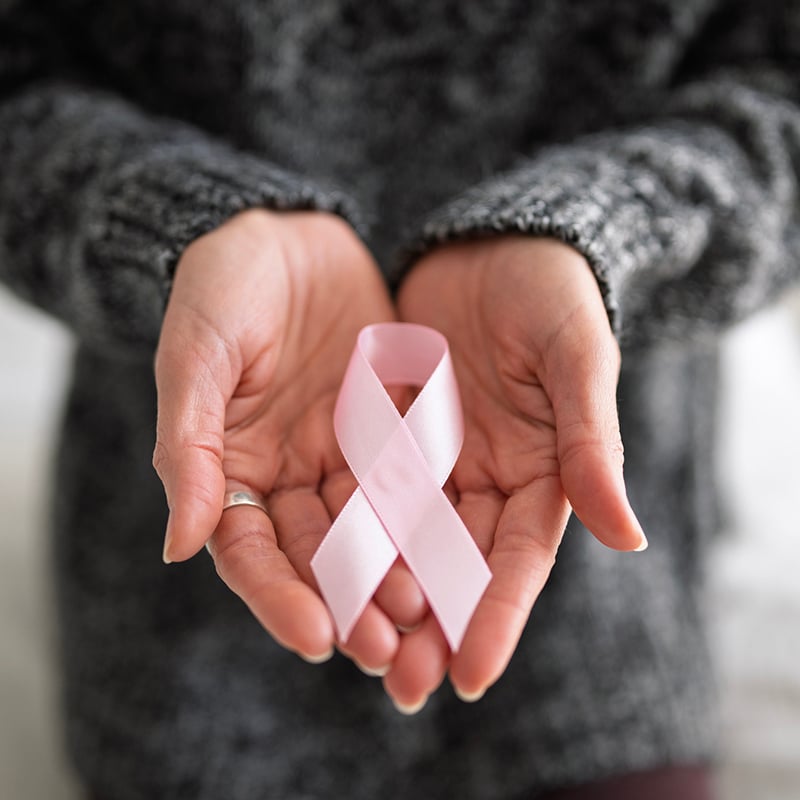
It’s always a good time to support breast-cancer research, as the disease is the second most common cancer among women in the U.S. (behind skin cancer). One in every eight women will develop it in their lifetimes. But the rallying cry is particularly loud in October, Breast Cancer Awareness Month, when we celebrate survivors, listen to the stories of those undergoing treatment, spread the word about early detection and raise money toward a cure.
We’ve rounded up some of the events happening this month, along with local charities worth knowing about if you’re looking for a way to lend your support. And because awareness is also about knowing what steps you can take for your own health, we’re bringing together the key takeaways from our recent health feature on mammograms — including what to know about screening and why staying on top of it matters.
- Oct. 24. Making Strides of the Meadowlands, MetLife Stadium, East Rutherford, 8 a.m.
- Oct. 25. Englewood Health Foundation’s Fader Family Walk for Awareness, Overpeck County Park Amphitheater, Ridgefield Park, 11:30 a.m.
- Oct. 28. Valley Health System’s A Night of Radiance, The Valley Hospital Conference Center, Paramus, 6 p.m.
If you can’t make it to these events, consider supporting these nonprofits that provide services to breast-cancer patients, survivors and their families:
- CancerCare New Jersey, 1 Kalisa Way, Suite 205, Paramus, 201.444.6630
- Sharsheret, 1086 Teaneck Rd., Suite 2G, Teaneck, 201.833.2341
- The Tutu Project, 110 Chestnut Ridge Rd., #185, Montvale, 551.579.4269
Beyond awareness walks and support groups, women are encouraged this month to consider a mammogram, as early detection is still one of the best defenses against breast cancer. But for something so routinely recommended, mammograms can still raise plenty of questions. BERGEN spoke with Donna McNamara, M.D., a breast medical oncologist at Hackensack University Medical Center’s John Theurer Cancer Center, to separate fact from fiction and tackle some of the most common misconceptions surrounding mammograms. For instance:
Myth: “Mammograms are extremely painful.”
The fear of pain can be enough to make some women put off a mammogram. “While some women find mammograms uncomfortable or briefly painful, many do not,” Dr. McNamara explains. The discomfort comes from the compression of the breast tissue, but that compression lasts only a few seconds for each image and serves an important purpose. “The compression is crucial for getting a clear, accurate image and reducing the amount of radiation needed,” she says.
Timing the appointment also can make a difference. “Scheduling the exam for a time when your breasts are least tender, such as the week after your period, can also help minimize discomfort,” she says.
Myth: “Having dense breasts means something is wrong with your breasts.”
Breast density refers to the composition of breast tissue—specifically, the proportion of fibrous and glandular tissue compared with fatty tissue. “This is not a disease or an abnormal condition,” Dr. McNamara says. “Having dense breasts is normal and very common; about half of all women have them.”
There is, however, an important distinction women should understand. “Having dense breasts is a risk factor for developing breast cancer,” the doctor says. Dense breast tissue also can make mammograms more challenging to interpret because both dense tissue and tumors can appear white on the image, potentially making some cancers harder for radiologists to see.
To read more about mammogram myths, read the October issue of BERGEN.