
7 Myths About Mammograms, Busted
The best available breast-cancer screening tool continues to be the subject of misinformation. Here, a local breast surgeon clears things up.
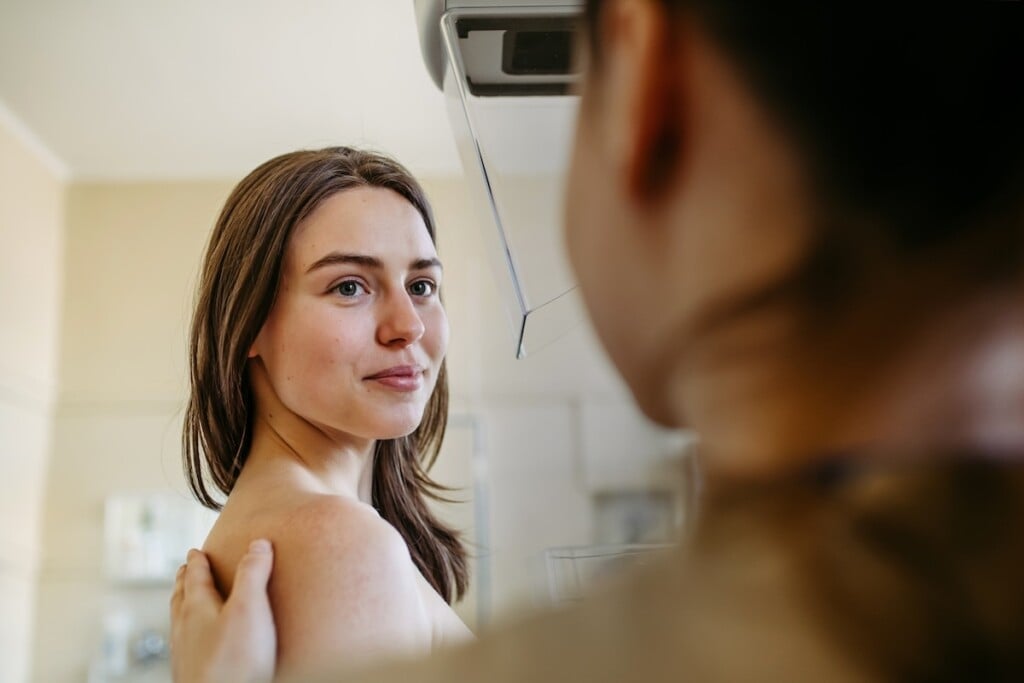
October, Breast Cancer Awareness Month, brings pink ribbons and plenty of reminders about the importance of breast health. And for good reason: Aside from skin cancers, breast cancer is the most common cancer in women in the United States. The American Cancer Society (ACS) estimates that more than 321,910 women will be diagnosed with invasive breast cancer in 2026, and approximately 42,140 will die from the disease.
Mammograms are an important tool in detecting breast cancer, sometimes finding abnormalities before they can be felt or cause symptoms. But for something so routinely recommended (the ACS calls for annual screenings for women ages 45 to 54, then either switching to every other year or continuing yearly at age 55 and older), mammograms can still raise plenty of questions. How often should you get one? Does having dense breasts complicate the process? Can artificial intelligence read the results better than a human? Does a mammogram hurt—and can it actually cause harm?
MORRIS & ESSEX spoke with Sarah Fuzesi, M.D., a breast surgeon at Summit Health in Orange, to separate fact from fiction and tackle some of the most common misconceptions surrounding mammograms. The goal isn’t to add to the noise, but to provide some clarity—and hopefully encourage readers to have informed conversations with their own health care providers about what screening is right for them.
• Myth: “I don’t need a mammogram if my family does not have a history of breast cancer.” “Unfortunately, breast cancer can occur in women with no family history,” Dr. Fuzesi says. “The average risk for breast cancer is about 12 percent, which means that roughly one in eight women will get breast cancer. Only about five percent of all cases of breast cancer can be linked to a genetic cause.” That means a woman cannot assume she is protected simply because breast cancer hasn’t affected her mother, sister or other relatives. While having a family history of breast cancer can increase a woman’s risk, it is far from the only risk factor. Simply being a woman and getting older are also significant factors. For women at average risk, regular screening mammograms are recommended regardless of family history.
• Myth: “Mammograms can cause breast cancer because of the radiation.” Some women worry that the radiation used during a mammogram could increase their risk of developing breast cancer. But our expert says that concern shouldn’t keep women from getting screened.
“There is overarching evidence that women who get mammograms require less treatment and lower-stage breast cancer at diagnosis,” Dr. Fuzesi says. “The benefit greatly outweighs the risk. Radiation from a mammogram is about as much radiation as an airplane flight from New York to Tokyo.”
• Myth: “Mammograms are extremely painful.” The fear of pain can be enough to make some women put off a mammogram. In fact, some women experience more discomfort than others, Dr. Fuzesi says, particularly “at different times of the month.” Consider scheduling an exam a week after your period, when breasts are less tender, to minimize any discomfort.
“I recommend going to an imaging center that has experienced techs who will address your concerns,” she adds. “Most women tolerate the test, and if you can’t, there are other tests that can be done. Talk to your doctor about your concerns.”
• Myth: “Having dense breasts means something is wrong with your breasts.” Breast density refers to the composition of breast tissue—specifically, the proportion of fibrous and glandular tissue compared with fatty tissue. A doctor will use a mammogram to diagnose dense breast tissue, but it’s neither a disease nor an abnormal condition—about half of all women have dense breasts.
There is, however, an important distinction women should understand. “We care about it as breast surgeons,” Dr. Fuzesi says, “because it makes it harder to detect breast cancer if you have dense tissue and therefore makes your risk of breast cancer higher. As a result, we often recommend supplemental screening either with ultrasound, MRI or both.”
Dense breast tissue can also make mammograms more challenging to interpret because both dense tissue and tumors can appear white on the image, potentially making some cancers harder for radiologists to see.
So while breast density itself is not something to be alarmed about, it is information women should discuss with their healthcare providers. Knowing whether you have dense breasts can help you and your doctor make informed decisions about your breast-screening plan.
• Myth: “If I have dense breasts, a mammogram won’t work, so I should just get an ultrasound or MRI instead.” A diagnosis of dense breasts can sometimes leave women wondering whether a mammogram is still useful. The answer, according to the doctor, is yes. “It will absolutely be more difficult to detect small, early-stage breast cancer on a mammogram, but certain findings will still be seen even in the most dense breast tissue such as calcifications, distortion and some breast masses,” Dr. Fuzesi says.
“We recommend yearly mammogram, as consistent repetition allows radiologists to detect small changes,” she adds. “But you should definitely ask your doctor about supplemental imaging.”
In addition, advances in screening technology have made mammograms even more effective for women with dense breasts. Three-dimensional mammography, or tomosynthesis, can be particularly helpful for women with dense breasts, she says.
• Myth: “Artificial intelligence (AI) can read a mammogram better than a human.” AI is increasingly being used as an aid in breast imaging, but it is not simply an autonomous replacement for the radiologist. According to the Food and Drug Administration, AI-enabled breast-imaging tools should be used in various adjunctive roles rather than as a wholesale replacement for standard mammographic interpretation. Like mammograms themselves, AI isn’t perfect. More technology doesn’t automatically mean lower rates of breast cancer overdiagnosis [when screening detects cancers that are slowgrowing and would never cause symptoms during a person’s life] and fewer false positives, the FDA says.
• Myth: “A callback from the doctor always means bad news.” When a doctor or an imaging specialist asks you to return for more testing, it’s human nature to think of the worst-case scenario. But don’t fret, says Dr. Fuzesi. “In the world of breast imaging, callbacks and additional testing are frustrating and anxiety-provoking,” our expert says. “Most of the time if you need additional imaging it doesn’t necessarily mean you have breast cancer, but that the radiologist wants to take additional images to gather more information before making a final recommendation. Trust the process and your team.”
“Getting mammograms shouldn’t be scary; it’s empowering,” the doctor says. “Make it part of your self-care and know that you are taking control of your health. If fear is holding you back, ask yourself what you would tell your mom, sister, daughter or best friend and do it for all the important people in your life.”