
Get Ready For Back-To-School Season
A Bergen expert offers tips and tricks to ensure your student starts the new year with ease.
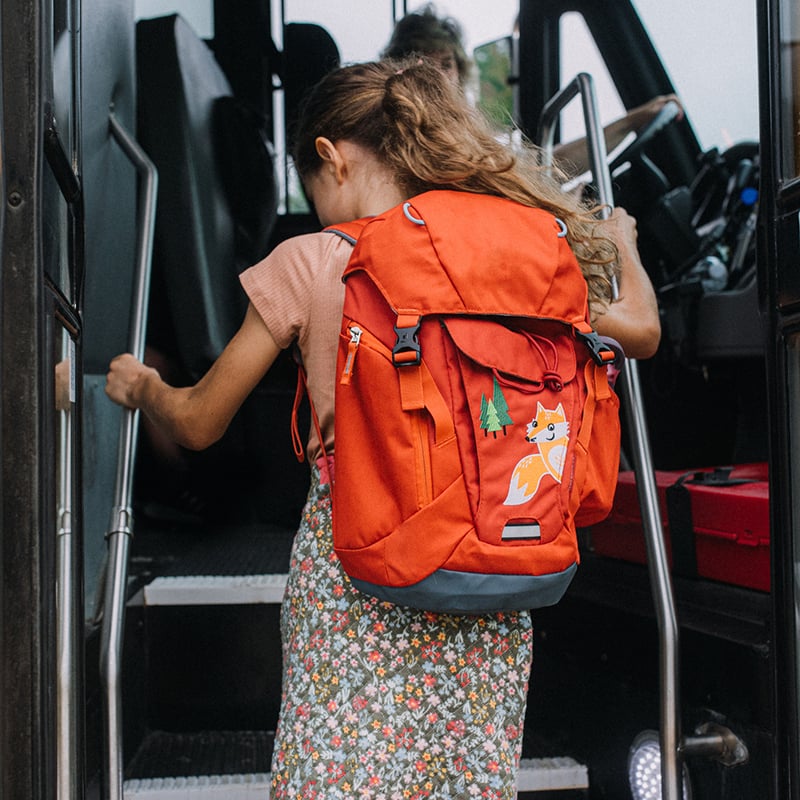
The child or teen in your life is probably sulking as you read this. Schools across Bergen are welcoming students back to the classroom over the next two weeks, meaning that it’s out with sleep-ins and poolside days and in with homework assignments and after-school activities—and, for parents, it’s in with chauffeuring everyone to and from those activities. The transition from summer to school year can be difficult for all.
Of course, you can help set your kids up to succeed. Make sure you pick up hand sanitizer and tissues to stash in backpacks, cars and coat pockets, and schedule an annual wellness visit if you haven’t already. If you have a teen in your life who needs access to specific software for schoolwork or passion projects, make sure you glance over student discounts they can take advantage of.
How else can you ease everyone back into school-year structures? Here are some tips from Zeynep Ozinci, M.D., a board-certified child psychiatrist and the clinical director at Pearl Psychiatry and Therapy Center in Ridgewood, on ways to make the transition easy:
Be selective. “If a schedule contains 20 precisely timed steps, it is probably designed to fail,” Dr. Ozinci says. Rather than planning out every second of every day, she recommends focusing on keeping three “anchor points” consistent: the morning “launch” period (wake-up times, breakfast and time spent on hygiene such as showering), the post-school decompression period (opt for a healthy snack and some kind of non-screen-based playtime or activity before starting homework) and the evening wind-down.
If kids are struggling to stick to these schedules, she advises, “Make abstract concepts like time visible. Younger children often do best with photo checklists or visual schedules they can physically complete, while adolescents typically respond better to shared digital calendars and other systems that foster independence.”
Get those Zs. Sleep is vital for everyone, but it’s particularly important for children and teens. When a child or teen is sleep-deprived, you can tell. “The amygdala, the brain’s emotional smoke detector, becomes overreactive,” Dr. Ozinci says. “It causes anxiety, irritability, impulsivity, emotional outbursts and difficulty concentrating.”
Working a “digital sunset” into your family’s schedule can do a lot to keep sleep consistent. “About an hour before bedtime,” says Dr. Ozinci, “turn off personal devices and charge them outside the bedroom. Replace digital stimulation with signals of safety and rest: a warm bath, reading or meditation.”
Keep everyone moving. Building time into your family’s day for movement and exercise is also vital, according to our expert. “Movement is one of the most powerful health interventions we have,” she says. “It’s medicine for the brain and body.” The Centers for Disease Control and Prevention (CDC) suggests incorporating physical activity into your family’s daily routine via family walks or games; Dr. Ozinci echoes that idea. “You don’t need to force kids into highly competitive organized sports,” she says. “A spontaneous dance session in the living room, a bike ride, walking the dog, shooting hoops with friends or hiking with family works beautifully.”
Know signs of stress. The unfortunate truth is that if your child is struggling, he or she likely won’t simply say so. “Stress rarely enters through the front door announcing itself,” says Dr. Ozinci. “It sneaks in disguised as irritability, stomachaches or withdrawal.” It’s important for parents to keep an eye out for changes in mood. Anxiety and depression in young people often look like anger, frustration, emotional reactivity or a sudden loss of interest in activities. Keep an eye out for subtle changes rather than dramatic declarations, such as frequent headaches or stomach aches, self-isolation, declining grades, sleep disturbances and appetite changes.
Teens have a lot of reasons to be stressed. When BERGEN talked to a panel of 11 rising seniors in our annual high school forum, they cited schoolwork, college admissions and social pressures as some of the main things keeping the up at night. Says Michael Dottino, a student at New Milford High School: “It’s very difficult to manage your time when you have to do all these different things, especially with school and the APs. I end up dealing with the stress by putting stuff out. Like, if I have to take a test on Thursday, I’ll try to do all my schoolwork within the school day to get it out of the way.”
If you suspect that your child is feeling stressed, your first instinct is likely to take steps to fix it—but Dr. Ozinci offers a caution. “Most adults switch into problem-solving mode right away,” she says. “We offer advice, solutions or logic. But emotional regulation almost always follows emotional validation. Before you correct, connect.”
She suggests sitting beside your child and, rather than offering a solution, saying, “It makes sense that you’re feeling overwhelmed.” If anxiety continues to get worse, offering simple tools such as “box breathing” (inhale for four seconds, hold for four seconds, exhale for four seconds) or the five-senses grounding technique (naming five things you can see, four you can touch, three you can hear, two you can smell and one you can taste) is also often effective.
Want even more back-to-school tips and inspiration? Check out our August issue!