
Teens Tell All
What it’s like to be a high schooler today? AI couldn’t tell us, so we asked 11 rising seniors from around the country instead. Here’s what they said.
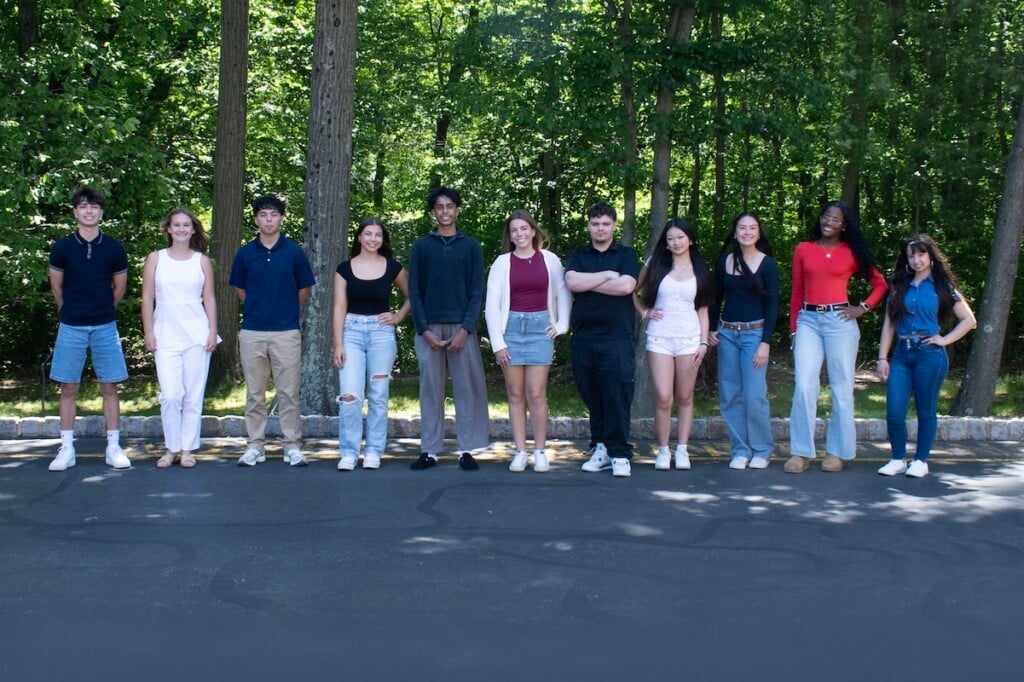
Everyone who’s been to high school knows that seniors rule the roost. As for those who are about to be seniors, their confidence can be unsettling. “In 10 years,” declares one student, “I hope to see myself in the operating room, administering anesthesia.” But in today’s world of academic pressure, social pressure and a job market evidently about to be gobbled up by artificial intelligence, confidence isn’t all you hear when you listen to a group of teens talk candidly in depth about their lives and expectations. You also hear fear. Says one: “They kind of throw us off the cliff and expect us to make our own parachute.”
BERGEN doesn’t cover everything when each year we interview a group of high schoolers. And our group is no statistical sample. Our chosen students are leaders—in the classroom, on the playing field, in activities and in the community. In fact, where they find time and energy for their dizzying range of pursuits is a terrifying mystery. But these are good, articulate kids. And except for one maddening conversational tic they all seem to share, we really, like, like them.
Rita: As rising seniors, you’ve completed three years of high school. What’s on your mind as you head into the summer before senior year?
Julien: The college process. The fact that this time next year I’’m going to be committed to a college really scares me, because I have no idea where I want to go.
Jenna: I want to balance having fun with schoolwork, because I’m taking APs and I’m going to have summer work, but I also want to prioritize hanging out with my friends before we all leave.
Maya: Getting that first draft of my college essay done is really weighing on me. Making sure I pick the right topic, something that expresses who I am as a person—while also, I agree, spending time with my friends, because it’s our last summer in high school.
Rita: So how many of you are going to be doing academics during the summer? [Most raise their hands.|] Oh my gosh, so most of you. Are you going to be working as well? Does everybody have a summer job? [Most nod and say yes.]
Malia: I would feel really high-stakes, even though we’re told it’s only one part of our application. I don’t think it’s the test itself that makes it so stressful, but really what it represents, like college opportunities.
Rita: Are you concerned about the job market? For example, has the emergence of Al influenced the way you think about what your major is going to be and what job you might go for?
Shawn: Yeah. So I have an older brother, and he’s going to graduate college next year, and seeing him trying to put himself out there in the job market and really struggling, it makes me think, “Wow, what’s it going to be like for me, especially when I’m going in later than him?”
Anthony: I think it’s going to be a very hard step, especially if you are interested in music or arts or something like that. It’s a very competitive state already.
Rita: Considering the challenges that the two of you just mentioned, is that giving you pause?
Anthony: Yes. I would say a little bit, just because it’s such a competitive market and it’s not really high-paying either. You have to have financial stability. Let’s say you have somebody in your life you love, you have to support them as well, and just balancing that out is very difficult.
Rita: You’re already thinking about marriage? [Laughs.| So you’re talking specifically about a career in music?
Anthony: Yeah. It could be other jobs as well, but either way, I think this state does have a high rate of people not getting jobs.
Viana: I agree and I disagree, only because I also want to create music, but I feel like Al can’t really take the arts away, only because there’s human emotion. When you see someone singing and you connect with that person, that’s something technology can’t really take.
Maya: I want to pursue the medical field, and Al was definitely something I was thinking about. I take a class called science research, and my teacher makes sure we get to explore different career choices. His advice to me on becoming a doctor was that a large portion of becoming a doctor is collecting information and creating a diagnosis, which when you think about AI, what does it do? It takes information and spits out an outcome. So while I agree with that, I think there’s something so important, as Viana was saying, about human emotion and connection. I think it will be a while before patients can come to terms with the fact that a robot is taking care of them. They trust in their providers. They want that connection and to feel safe with who’s in charge of their health care.
Sara: I’m interested in going into occupational therapy, and I feel like Al can’t really affect that either. Occupational therapy, physical therapy, speech therapy—those are jobs that I feel cannot be replaced by Al because you need that human, face-to-face connection to help someone recover.
Jenna: I’m a little worried about some fields because I think the ones that will continue to succeed are the ones with innovation. I mean, after all, humans made Al, so if we continue to put in our own creativity, we’ll be fine. But the careers that don’t have creativity or innovation, Al is just going to build off what we already know and take that over.
Shawn: I want to go into finance, and although Al is definitely making waves there, it just makes me want to work harder so that I don’t have to worry about having my job stolen by Al.
Julia: I can see how Al has been used many times throughout the school year. There’s such a difference between personal voice and what this technology is telling me to write. It’s sort of what I truly feel. That ties along with what both of you are saying with the music. So what Shawn was saying, working harder, I totally agree with that.
Rita: Do you feel informed about your options after high school?
Michael: I feel we were put in a position where we felt like we have to figure it out all ourselves. And that since we’re becoming adults, we need to learn how to deal with our own problems at a certain point in our lives. And they kind of throw us off the clift and expect us to make our own parachute.
A REALLY BIG DISCONNECT
Rita: On your way down? So what about guidance counselors?
Julien: My guidance counselor helps me a lot. I think she respects me, she trusts me, and I feel the same way about her. Because, I feel what Michael said, like, yes, we’re thrown off a cliff. But the way we learn is by making mistakes. And I feel like my guidance counselor’s been there when I make mistakes.
Shawn: My guidance counselor and the resources available to me are very sufhicient. A lot of the time when I see my peers saying they don’t know what they want to do, I think it’s because they’re not utilizing their resources properly. But there’s definitely an aspect of; like, overwhelmingness. There’s so many things happening at once.
Julia: I feel I have a really big disconnect with my guidance counselor. This whole high-school process has been really stressful for me. I was really lucky. I have an older sister, so she helped me through everything. But at our school we offer so many great things, externships and internships. I had no clue about it, but my friends did. When I was looking at what they were doing last summer, they were all interning at all these amazing places where I didn’t know about that.
Rita: I guess you have to get information from lots of different places.
Anthony: I fully agree. Guidance could always do more. And my relationship with my guidance counselors—to be honest, it’s not really the best. I feel like every time I would have to reach out to them, they wouldn’t really reach out to me. It’s very noncommunicative, if that makes sense. Just even the college application process—we have to do it all ourselves. I have to ask my senior friends every time about the SATs coming up, or colleges I want to go to for visitation.
Rose: A lot of times there’s not many guidance counselors for such a big school. My school is much smaller than a large public school, but we still only have two or three counselors, so it’s hard when one counselor is working with 25, 50 kids. It’s hard to feel like they know you on a personal level.
Rita: That’s a good point—I think that the kids who really push and say, “I need you for this or that” are the ones that are going to get the help. So now I’’m going to segue into the cost of college. Has that impacted where you want to apply and how hard you’re studying, in the hope of scholarships?
Sara: With occupational therapy, a lot of schools have dual-degree programs which lower the cost and make it faster. So it would be either a “3 plus 2” or “3 plus 3.” That’s something I’m definitely interested in, especially when I’m looking at colleges. Sacred Heart has one. Quinnipiac has one. That narrows my options, because it’s a way to save money and still get the degree.
Maya: I’m looking to be a doctor. Right now, I’m looking to pursuing B.S.-and-M.D. programs, where, straight out of high school, you can apply to one school that will connect you to the medical school and you’re guaranteed admission. They’re extremely hard to get into. But they can be a faster process in getting to your end goal. At the same time, though, me and my friend who recently were talking about this, it’s frustrating as a student to work so hard and maybe end up getting into your dream school and be unable to attend because of cost. I think that’s why we work so hard hoping to get merit scholarships. But not everybody is going to be recognized, and the costs just keep increasing.
Jenna: Price 1s definitely a factor, but depending on the reputation of the school, I’m willing to take out loans. Like, for example, if I got into an Ivy and they weren’t going to give me that much scholarship, I’m willing to pay back loans later in order to get the degree from there.
Rita: Do you have an idea of a career path?
Jenna: I want to do chemical engineering. For that, I think it’s better to get a degree from a school with a good reputation because when you’re out in the job market, the employers are going to pick the one with the degree from the better school.
Shawn: For me, cost is definitely a driving factor. When I talk with my parents, a lot of the time they bring up my older brother. He’s getting a degree right now, and college is very expensive for him. Seeing the struggles that he goes through regarding debt and college expenses, it’s always in the back of my mind. Like, do I want to do what I really want, or do I want to do what’s best for me?
Rita: Could you explain?
Shawn: For instance, if [ wanted to go to UCLA with its reputation and its opportunities. And then if I wanted to go to a state school like Rutgers. Obviously, Rutgers would be much less expensive, but they may not give me the opportunities UCLA would.
Malia: I agree with a lot of what you guys are saying. But I wouldn’t take a school oft my list just because of cost. Cost is a driving factor for me, and I’m interested in going into the field of business marketing. So especially with the advancements of Al it might be a bit tougher for me. But you just never know. And I think you’re going to end up where you’re meant to be. Some of my top schools are close to 90 to 100K a year.
Rita: Are you guys thinking you’ll just take on this debt, or are parents helping?
Malia: I probably would stick to a school that gave me more money, even if it doesn’t have the best reputation. I don’t think I’m willing to go into, like, 400K coming out of college.
Julia: Oh, I definitely agree. It’s really important to our family—my mom wants me to apply to any school I want to. But when it does come to cost, she would prefer me to go to a school that did give me more money because when we’re graduating college, I know it can be tough sometimes to get a job. It might take some time to look around. So I wouldn’t want to be too much in debt.
Maya: I definitely agree it will come down to cost, at the end of the day, among other things. Pursuing a degree in medicine, for example, eventually you will have to pay back your student loans. Hopefully my parents will help me as much as they can. But I’m also aware that I want to go to a good school and I’m willing to pay back what it comes down to.
Rita: We’re talking a lot about finances. Do they teach that in school? And is there something you wish were taught in high school that really isn’t?
Michael: Physical things like sewing and fixing buttons are not widely accessible within lots of schools, and this stuff is important as a basic human skill. I feel like most young people have no idea how to just fix a little rip on their shirt.
Viana: In my school, they have a course in financial literacy in ninth grade, but it’s only for a short time in a quarter. I feel like that should be taught at least in senior year because I don’t remember anything that was in freshman year.
Rita: That’s a good point, because now you’re facing decisions that are going to impact your adult lives. Paying back loans is a big deal.
Shawn: Something that should be required is learning about public speaking. It’s one of the largest skills that can help you progress regardless of your career. The opportunities for public speaking are only really through clubs like Model UN or DECA [Distributive Education Clubs of America]. If you could already start ahead of the game, that would be very helpful.
Julia: I love that you brought that up. I actually took a class last year called Effective Communication, and we were put into situations where we had to give speeches. I had to do a wedding speech. So it was a toast, and you got to pick whoever you wanted to give it to. You could have done Spongebob Squarepants! I did my sister. It was just so amazing—you were put into a scenario that you had to learn how you’re going to be in front of 100 to 500 people one day. I wish they made this a mandatory class.
Rita: Did you speak extemporaneously or were you allowed to use cue cards?
Julia: So for some of them, we used cue cards. But for this wedding toast, you were put on a podium on stage in our auditorium, and you had to speak to the rest of the class from just what you memorized from your script. And it was really cool to see everyone and what they had to say and how you truly saw the personalities just flow through everyone because you were going off of your head but trying to memorize. You heard, like, the little giggles and everything.
Jenna: My school also has public speaking as an elective. But they don’t make us take it, and I think they should. I haven’t taken it, but it’s definitely a good life skill. And then personal finance is an elective all sophomores have to take. It’s only half ayear. I also think we should bring back home economics classes because so many people don’t know how to do basic skills in life.
Rita: Home economics, that’s a good one. Steve, do you know how to sew a button?
Steve Vitarbo [BERGEN’s creative director]: I failed home ec in seventh grade, and I am the cook and seamster of my house.
Rita: OK. How do you juggle academics, athletics, extracurriculars, socializing and work? I’’m surprised to hear that so many of you will be doing academics even throughout the summer. How do you juggle everything?
Jenna: I’ve used a planner for, like, ever. I write down all my clubs, all my homework definitely to organize and also to remember everything.
Rose: I’m a three-sport athlete, and I also take, like, AP classes. Especially this year, January, I did a lot of working ahead. Like, on the weekends, I was really careful of what my week could be—when I had games, what time my practices ended, what I had to do after school. If Ihad a big test on Thursday, I would study, say, on Sunday.
Rita: What are your three sports?
Rose: I play volleyball in the fall, basketball in winter and lacrosse in spring.
Rita: Are you on the traveling team?
Rose: Yeah, I play on a club team. I’’m actually going to play lacrosse in college, so I play on a club team over the summer.
Michael: It’s very difficult to manage your time when you have to do all these different things, especially with school and the APs. I end up dealing with the stress by putting stuff out. Like, if I have to take a test on Thursday, I’ll try to do all my schoolwork within the school day to get it out of the way, while also thinking, “Oh, how am I going to get to it after school?” Planning around your schedule and making sure stuff doesn’t overlap is the biggest part of dealing with stress.
Malia: I do something really funny. I’’m on the executive board for a lot of clubs. I will email myself, text myself and set reminders on my phone. I’ll schedule emails so that when I wake up in the morning, I remember exactly what to do.
Shawn: To balance out all the things I do, I rank them on a level of importance. Like, what do I have to do first, or what do I have to do that’s most going to affect me? And then, like, I just go down that line. Like, you don’t want to wait for the last second.
Julien: I agree with Shawn. In the winter last year, I was doing track. My main sport is not track; I’m a two-sport athlete, and I was just doing track to get better at my main sport. And my grades, like, they took a toll because it’s hard. Like, you go home from your practice, your extracurriculars, your games, and you realize, “Oh, I have a test to study for. Oh, I have a review, a 50-question review to study for, and I have 20 minutes to do it.” And that’s why what Shawn said I think is really important, because you have to have some self-reflection and be like, “What is going to be really beneficial for me in the long term?”
Rita: Do you guys get a lot of sleep?
All: No. Flat out no.
Rita: How many hours, generally?
Anthony: I would say, like, four, maybe five.
Rose: I feel like I get a lot of sleep. I try to prioritize my sleep, especially being an athlete. Like, I can’t go to bed at 2 a.m. I know some of my friends are insane. But, like, I really try to go to bed by 10:30, because I’m going to get up at 6 in the morning to go to school. I feel like I need a lot of sleep to function.
Rita: I guess it’s what your body needs too.
Viana: I do try to go to sleep early, like Rose said. I try to go to bed by maybe, 9. But that’s very hard to do. I get home at, like, 8 o’clock, and then I have homework and then a shower. But I also don’t sleep the whole night through. I’m always waking up in the middle of the night.
SOON ‘I’LL BE FREE’
Rita: How do you deal with stress so it doesn’t become debilitating?
Viana: It’s always going. A lot of times I’m like, “What do I have to do the next day?”
Maya: Sometimes when I’’m super-stressed out, I will put aside going out with my friends or, you know, even sometimes my sport, if I really have to stay home and get work done. Because, even if I maybe have another slot of time where I can do it, if it’s really affecting me to where I can’t perform other things to my best abilities, I just have to get it over with as soon as possible and be able to move on to the next task with a clear mind.
Jenna: I’m a little bit the opposite. If ’’m at a breaking point, I’ll step away from the task instead of completing it. I get a little bit of procrastination, but I’ll stop and go out with my friends or go to the mall just to have some therapy. Malia: When I’’m stressed out, I like to think to myself, “In a month, when it’s summer, I’ll be free. I won’t have to do any of this.” So I just try and get whatever I have to do done in that moment. Julia: As high school students, a lot of stress is put onto us. I mean, we want to do things that we love and balance, “Oh, yeah, this is going to look good for college applications.” That’s something that definitely has stressed me out this year. [ was a threesport athlete, but I actually had to step aside from two of them because they just were not working out well with how I was.
Sara: I also had to do something like that. I had to take a step away from dance. I’ve been dancing since I was young, and it was one of the hardest decisions I had to make. But I actually decided to join theater, and that has been an amazing experience for me. And although it stresses me out to balance a bunch of things at once, just being at my extracurricular almost takes away the stress at the same time as it makes me stressed. The stress comes from, like, “Oh, after this I have so much more to do!” But while I’m there, everything just leaves my mind.
Rita: You’re are doing some interesting stuff. Tell me about your extracurriculars or your sports.
Malia: I’m a part of DECA and Black Student Union. I’m on the board for all three of these clubs. Like I said, I’m interested in marketing, so I’m vice president of marketing for basically all of those clubs. In my free time, I like to look up online certificates for digital marketing. I had my own passion project related to skin care and marketing, so I would post, me and my ambassadors would post, daily on social media. We would target middle-school girls.
Shawn: At my school, I’m student council president for my grade, and I’m also a part of afew clubs like DECA and Model UN. In DECA, I’’m the officer of fundraising, and for Model UN I’ve won awards like “best delegate.” Balancing those things out between work and school has been a learning experience for me.
Sara: I mentioned theater, so ‘m drama captain and choreographer for both the middle-school and high-school shows. I’m part of National Honor Society and Spanish Honor Society. I founded my own club with two of my friends. It’s called Package with Purpose, and we make homeless care packages and send them out. I’m also part of Global Awareness Club, where we work with kids in Kenya and tutor them over Zoom calls.
Anthony: I’m the president of drama club. I do yearbook as well, and it has deadlines. I do morning announcements, which is like videography and stuff like that. And I also play football, balancing out academics with theater. I’m also planning to do a musical this summer—registering for it today, actually.
Viana: Pretty much everything I do is music related. I’m in three choirs in my school. I do tennis, but that’s more just to stay active. I’m also in theater and theater honor society.
Maya: In school, I’m a part of speech and debate club, which I really enjoy, especially during the winter. It’s going to competitions. It gets some of my stress out when I’m attacking the pillars of my opponent. And then I’m also the vice president of fundraising for the team club at River Dell. We support different people within Uganda—children and grandmothers. We do a lot of fundraisers to try to get them some necessities, just like basic water and hygiene. Outside of school, something I’m passionate about is inclusivity. ‘m a part of the American Special Children’s Pilgrimage Group. This year I was privileged to travel to France with a group of special-needs teenagers and young adults. Our whole purpose is to make them feel included, because in daily life, you know, at times they might not feel like they’re accepted.
Michael: I’m part of the Future Health Club, the Peer Leadership Club and I’m part of the club that’s run by my friends. We write letters to elderly people who don’t have people to speak to a lot. I’m part of the Hispanic Honor Society. I’m class president. I play soccer and I run track. And outside of school, I just started volunteering at Valley Hospital in the nurse’s quarters.
Rose: This year I was captain of the basketball team and the lacrosse team. I’m pretty active. I’m vice president of the Outreach Club, a service club. We do food drives and other outreach programs. I’m also an ambassador for my school, so we give tours at open houses. And I work two jobs. Then I also coach 10-year-old girls. But I do that, like, year-round.
Jenna: Spanish Honor Society, National Honor Society, I do cheer as a fall sport. I do tackwondo year-round. But that’s also my job. So I take classes and I coach the little kids. I’m still a Girl Scout. I’m in a bunch of clubs like Outreach, Spirit Club. Spirit Club ties in with cheer, so that’s, like, mandatory. My friends and I are starting an animal club where we’re going to have fundraisers for the local shelter. Because my friend wants to be a vet. So that’s going to be fun.
Julia: I do golf. This year I was the girls’ golf captain. I’m also vice president of the Habitat for Humanity club at my school. We’re actually building a house in Oradell. ‘m not very handy, so basically I had to plan a lot of events this year so that we would raise money. Aside from that, ‘m part of the Hope Club at my school. One of our main events is Bring Your Child to Work Day. And we hang out with all the little kids.
Julien: I am a two-sport athlete. I captain my soccer team and I play golf; just like Julia. And I’m in the National Honor Society. I’m the president of the Italian Honor Society. I’m also in the athletic council. I do some mentor programs for the eighth graders and the freshmen. We go down to the middle school, and they ask us questions about high school. It’s basically all about sports—not going to lie. They all ask about sports. Some of them are like, “What’s lunch like?”
Rita: Does anybody in the group not have a job during the school year? [Eight students raise their hands.] Next questions: Who are your role models?
Rose: I’d say my mom. She’s an inspirational woman. She works really hard. She worked all through college. She is a doctor, and I want to be a doctor, so I really look to her as my inspiration.
Shawn: I would say my dad. He’s very accomplished. Back in the day he lived in a small town in India. And every time we had relatives or family friends over, they’re always telling me, “Oh, your dad brought us out of our small town. And he was the first one in his area to get into online, Al stuff and tech stuff; which got him a job in America.” Which is, like, the reason I’m here. That kind of makes me want to go a step further and make myself in a similar way.
Anthony: My sister. She had to take care of my other siblings—I have seven siblings total. She’s always been there, by my side. My mom got kicked out of the house. My dad was always working, so he couldn’t really spend that much time with me. She’s always been there. I’ll ask her questions about college or anything. Like, she’s in college right now, actually. She’s also pursuing music. And no matter how many times we get into fights, I know I can always count on her.
Viana: My mom. She’s also my best friend. She’s just been so supportive of me too. My dream, you know, music industry is a very, very difficult industry to get into. And, you know, I get scared sometimes wondering if I’m going to make it there. But she’s always by my side. I would call her a “momager” because she tries to help me.
Maya: Similarly in my family, my older brother. I’ve seen when he was younger and, you know, going through rough patches through high school and then getting into some amazing colleges. Then, in college, he eventually didn’t perform to the level he needed to, and he ended up going to community college. Now he has a fabulous first job that he’s making a great starting salary from. He said, “Everything that I went through in college was for you. I can spread all my wisdom, and you can hopefully have a little bit of a smoother path than me.”
Sara: Probably my theater director, because he made the transition from dance to theater— through comedy. He also kind of pushed me to, like, take more of a leadership role, because when I am doing choreography, I’m kind of on my own, and I’m teaching kids my age and kids older than me. That was a little intimidating at first, but with his support and help, he really made it a great environment to be in and just allowed me to be passionate about dance in a different way—be around my friends and still take on that leadership role.
Malia: I would say my biggest role model is all of you guys—and everyone I choose to surround myself with. I’m a strong believer that you are who you hang out with. I feel like you gain a whole bunch of insights and perspectives on everything by just who you hang around with. So, you guys all inspire me.
Julien: I’d say definitely my mom, the way she works. She deserves so much more than what she’s been given. Her constant drive to do everything inspires me to just put my 110 percent into everything I do.
Julia: I love what Malia said because I totally agree. You are who you hang out with. And I think just from hearing what everyone had to say, having a role model in your life—and it doesn’t matter who—gives you a little push to what you want to be. For me, also anyone that truly has a big influence on my life and makes me a better person is my role model, whether it’s a friend I met for the first time or my golf coach.
Jenna: A lot of figures in my life are role models, but a big one is my chemistry teacher. He’s the reason I fell in love with chemistry and want to go into it. But he also, as a person, persevered through many personal challenges. He’s had surgeries through my years with him, but he still was able to get us through the academics.
Michael: My freshman English teacher. She really taught me how to grow into my own self and be my own person and not worry about what other people think. She really helped me grow as a student as well, teaching me how to manage my time better.
‘PEOPLE YOU THOUGHT WERE FRIENDS’
Rita: Do you guys feel accepted by your peers? Are there cliques in school?
Anthony: In my school there’s a lot of cliques everywhere. Best way to put it is everyone’s so separated and everyone has, like, this tension. So this year we want to try to get everybody together, especially in the summer so we could build up for that. And there’s people that don’t like each other. But at the end of the day, you know, we’re all one class and we have to be together as one.
Rose: I go to an all-girls school and my class is pretty small. There’s only, like, 100 of us. Obviously, everyone’s going to have their own friend group, but I think everyone’s really close. We’ll all hang out, do different opportunities together. So I think it’s less cliquey, but that might just be because I don’t have evidence.
Malia: Yeah, I agree with Rose. There’s a strong sense of community and sisterhood at my school. I feel like people of different backgrounds, interests and perspectives do feel genuinely respected in our school. Everyone does have their separate friend groups. But I feel like in my school, we’re able to really come together.
Shawn: One thing I’ve learned being student council president for the past year is that there’s a huge lack of initiative in my grade. To participate in activities or, like, go out of their comfort zone, which is obviously understandable, but—
Rita: But wait. Is it because of having so much to do? Or is it a sense of complacency?
Shawn: I mean, there’s definitely multiple factors, depending on the person. Obviously, there’s things you can’t avoid—outside-of-school responsibilities. But, for the most part, I feel like a lot of people in my grade are just trying to get in and get out, you know? Just trying to get their eight hours of school done and then go home, do whatever they have to do. But for my grade I’ve noticed that a lot of people you wouldn’t expect to, hang out with each other, like, on a Saturday night. There’s a lot of interconnectedness between friend groups.
Julia: Personally, I had to go through something this year. I had to step away from some girls I was having conflicts with. And it taught me that in life there’s going to be a lot of people that are jealous of what you get. ‘m actually on the student government council. And just to see that a group of people you thought were your closest friends can be jealous of what you worked hard to get is really disappointing.
Rita: And it’s hurtful.
Julia: Yeah, it definitely really is hurtful. But I think for us—especially this group of people—we all learned how to, like, step away from that. I wanted to see what these people— maybe they would be better and want to be supportive of me. But instead of being supportive, they disappointed. So in high school, I think you’re definitely, like, learning who your friends are.
Jenna: Yeah, like, Malia and Rose, my school, I would say, is very tightknit. I mean, there’s, like, dudes at my school, not just girls. But I would say we’re, like, a small school. Everyone’s friends. I mean, there’s people that— sometimes you’re not fit for some people. But we all get along. There are definitely friend groups.
Maya: River Dell has such an interesting place because we are two towns. We’re River Edge and Oradell. And we come together into one school. And I was coming from a super all-River Edge girl-friend group. As soon as I entered high school, I had an experience similar to what Julia was going through. And I ended up, through my classes, becoming friends with girls I think I ended up being better suited for. And now it’s interesting—amy entire friend group is Oradell girls. For the most part, especially through our classes at River Dell, you can really befriend people from all different groups. There are different cliques, per se, or different groups of friends. Some of those groups try to separate themselves more than others. But for the most part, we really have a great community. And if you are willing to talk to other people, they’re willing to talk to you. And we can make new friends all the time.
Rita: So what about bullying? Has anybody been aftected by it, witnessed it? You know, we read horrible stories in the news.
Anthony: Probably when I was a kid, I would say elementary-school cyberbullying, which obviously ties into the social media. I’ve been involved in a lot of stuff that deals with bullying. Obviously, you know, being fat-shamed is a big thing too. I don’t let it bother me, because now in high school, nobody cares what you do nowadays. But, yeah, I have had experiences with being cyberbullied.
Julien: Well, when I was in eighth grade, I don’t know about you guys, but I thought high school was exactly like in the movies. Like, it was all bullying. If you’re a freshman, don’t even go into the hallway. I remember I was talking to my friend—he’s still one of my best friends—and I was like, “I’m not going to go to bathroom freshman year.” And I learned that it’s very different. Like what Anthony said, nobody really cares what you do as long as you don’t act like you’re some certain way, like, that you’re not. Like, if you don’t act, like, with your chest up or, like, you act like you’re hard or whatever it is. Right?
Rita: Just be who you are.
Shawn: I would say for my school, it’s kind of an outdated concept. Obviously, people poke fun at each other. But for the most part, if there is bullying, it’s shut down very quickly. Our guidance counselors and administration are very keen on noticing things— cutting it at the root, you know, instead of letting it blossom into something else.
Michael: It doesn’t happen in the traditional way that people think anymore. It’s not really a teasing— they don’t want to say straight to your face anymore, but, like, spread around behind your back instead.
Maya: I agree. At River Dell there isn’t the classical sense of people fighting in the hallways. But there’s definitely a rumor aspect where word travels really fast. If someone’s doing something they’re not supposed to, it gets around, and I think that can make people feel really isolated and hurt. So in that sense, that’s bullying as well as, like, gossip. But for the most part, not if you’re with a good group of people you can trust. You have to be careful what you say if you’re not.
Rita: Does anybody have a favorite high-school memory?
Anthony: Powder Puff, which is basically the boys are the cheerleaders and the girls play the game. That was when our class really got together—everyone was so happy that day. And probably doing the musical this year, Frozen. I played Kristoff.
Malia: We have Sophomore Spirit Day at our school. That was really a day where I felt a strong sense of community and sisterhood because we were all randomly placed in separate teams. So even if you didn’t really talk to one of those people in a group, you were forced to in that moment because you wanted to win whatever competition was happening.
Sara: All the bonding with my theater friends. We did Bye Bye Birdie. And this year was my first year being in it. Just being more present this year compared to last year and being around everyone, it’s been some of the best times we’ve had. We do a lot of outside bonding stuff. We go to Applebee’s Thursday night, and watch the Tony Awards and have a cast party. I feel like all the outside bonding makes the performances so much better because we’re all so connected.
Viana: We did Little Mermaid. I was Ariel, and it was so fun. I got to talk to people I never thought I would ever speak to or ever have a friendship with, and now they’re one of my closest friends.
Jenna: I’m on the cheer team, and there’s a specific feeling when your football team wins. We have this special cheer, and then we all gather and hug, and it’s a great feeling. You feel like family.
Julien: My favorite memory would be freshman year. I was on varsity soccer, and we made it to the sectional final. We did lose, but there was, like—my school is really small. Our town is a mile long. There’s 800 kids in my school, and there was at least 500 kids at the game, and that’s the most because not a lot of people go to soccer games. It was an amazing experience. It was so cool seeing everybody there.
Shawn: One of my favorite experiences was actually this year. We had a basketball game, and typically maybe 40 people max would come out to the games, but this one was directly after school. The stands were packed. And we ended up winning that game in overtime, and one of my friends actually scored the game-winning basket. Two seconds left on the clock. Right as it went in, everyone rushed to the court. It was crazy.
Julia: This year by far has been my favorite year— through all the stress and everything that I’ve had to learn from. It’s bittersweet, almost—I’’m really close with the seniors, so, just having our last moments together. At the beginning of the year, at football, you have one week that’s Spirit Week and then you have a big pep rally. It was just so much fun.
Rose: My favorite memory is probably my freshman year, being on the lacrosse team. Coming as a freshman, I felt really accepted and it was such a tight community, just my team. And I had some of my best friends, like those seniors that graduated that year as well.
Michael: It was a few weeks ago. My track team won the sectional title, which was really cool. And being a part of that team was really something fun. Getting to do it with some of my closest friends really made it a highlight.
Rita: Do you guys feel safe in school?
Julien: Yeah. My school is located right next to a police department. And we have an officer and a security guard at school. So I’m pretty much good.
Anthony: Yeah, my school, the same thing. There’s a police station and we have security officers. Our administration takes it very seriously.
Malia: We also have police officers walking around in my school, and you can only get into the building with your ID.
Rita: So where do you see yourselves in 10 years? You’re going to be out of college. You’re going to be in a job. Anthony’s going to be married. What do you hope for 10 years from now?
Jenna: I see myself starting a stable career, hopefully, and I definitely want to start settling down and starting to have kids and have my own house stuff.
Michael: In 10 years, I hope to see myself in the operating room, administering anesthesia.
Rita: Oh, you want to be an anesthesiologist?
Michael: Yes, a nurse. And I want to have a family and hopefully own a home.
Malia: I hope I’m working in corporate beauty marketing and I’m also interested in luxury real estate. And entrepreneurship. I want to start my own skincare line, so before that, I would also have to build up a strong social-media presence.
Anthony: Broadway!
Shawn: Actually, I had to do an assignment like this recently for Spanish. I see myself in the investment banking line, particularly on Wall Street. I’ve always seen that as an admirable job and a steady career path.
Viana: I’m hoping Broadway or beyond. I also song-write, so that’s also another dream, of course.
Rita: Oh, wow. So we’re all going to see you guys do big things!
Julia: I definitely want to study in the business field. Not really sure yet where, but I would love to just have a happy life and a happy work life.
Julien: In 10 years, I see myself working in some dermatologist field. I also am very interested in entrepreneurship, and yeah, I want to settle down around like 28, 29. But yeah, I want to have a happy family life, and I want to also own a home by that time.
Sara: I hope to become an occupational therapist, specifically of pediatrics. I don’t have to think about like my future too much, because I know, like, whatever happens will happen.
Rose: I also want to work in pediatrics. I want to be a doctor, hopefully a pediatrician.
Maya: In 10 years, I hope to be in residency for emergency medicine, and I hope that I have a fiancé. That would be really nice. And hopefully looking at homes.
Rita: We didn’t talk about social media. When you do a post, are you thinking about going viral? Are you just trying to have fun with your friends?
Julia: I use social media a lot. When I was younger, I didn’t have an iPad or anything, so I didn’t really like the idea of social media. I felt I had to have it going into high school because that’s how you’re going to meet friends. But now that I’ve used—I use Instagram every day, Snapchat, TikTok. I mean, I would love to go TikTok famous one day.
Rita: But is that just another thing you have to do? Is that why you’re getting only four hours of sleep? Like, “Oh, I didn’t check my accounts today and I didn’t post enough today.”
Anthony: I wouldn’t say that. I feel like you could use social media in a very positive, impactful way. Social media is such a big thing now. Everybody uses it to communicate, posting stories, posting reels. And just like she said, if you go viral, that gives you credibility. You could use that for the future.
Malia: I don’t think social media is automatically positive or negative. It’s important to be intentional about how you use it because you don’t want to start comparing yourself to others and getting into all of that. But I absolutely do love social media. I love the creative aspect of it, the ability to connect with others and just express yourself authentically.
Michael: I guess, like, as an archive, if they’re still around in 20 years, I’ll look back at it and, like, “I was doing all that stuff.” It’s like an online scrapbook.
Editor’s Note: Special thanks to Kirsten Meehan, Darius Amos and Stephen Vitarbo.