
Is At-Home Testing For You?
Today, getting personal medical news is easier and more convenient than ever. But know what that news can actually reveal—and what it can’t.
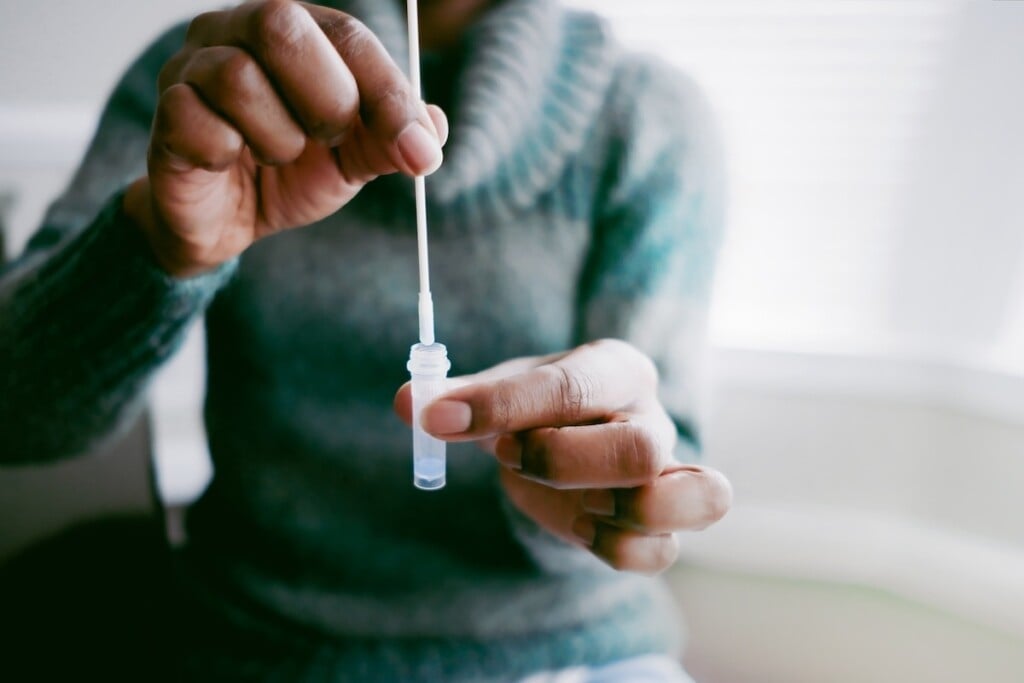
In 2026, it’s rare to find a person who hasn’t taken an at-home COVID-19 test. Such kits were household necessities at the height of the pandemic; you likely have a few in your medicine cabinet right now—and use them. We all want to know, after all, if the congestion and fatigue we’re feeling indicate just a touch of late-spring allergies or a reason to stay home from work or school. You can pick up a similar testing kit that will tell you if you have the flu, for the same reason.
It’s not just for upper-respiratory woes. Browse a local pharmacy today, you’ll find at-home tests that measure blood sugar, check for urinary tract infections (UTIs) and flag if one has entered menopause. Turn to online storefronts and you’ll find even more options—checking for Lyme’s disease or low vitamin-D levels, for example. And the trend is growing. Last year, the Food & Drug Administration (FDA) approved an at-home test for human papillomavirus (HPV), the cause of most cervical cancer and the virus screened for in a Pap smear. Still more at-home tests can be ordered by doctors—patients can take a sample of stool or urine, for example, at home and send it to a lab themselves.
The appeal of such tests for the consumer is obvious. They’re convenient, as they don’t require the time and travel of a trip to a primary care physician or urgent care; and they’re usually fast, so there’s no waiting for results. But BERGEN wondered what a doctor thinks— of the home HPV tests, for instance.
“Access to care is always good,” says Seena Shekari, D.O., a family physician at Valley Health System in Waldwick. “We’re lucky in Bergen County to have many doctors and providers. But if you live somewhere rural, it may be a two-hour drive to see a gynecologist. Some people can’t do that, and those are the people this new HPV test really helps.”
A further chat with the doctor reminded us that everything in medicine involves trade-offs. He had, for example, some good news about home testing— and some bad.
• The good. Dr. Shekari’s favorite new option? “Continuous glucose monitors, or CGMs,” he says. “They’ve been available through prescription for a while, but now you can get them over the counter. They are a powerful tool not only for people with diabetes, but also for those just concerned about their blood sugar.” These wearable devices measure your blood sugar levels 24 hours a day without the need for finger pricks; they’re often attached to a smartphone app. “They give people real-time feedback on how what they do affects their sugars,” says the doctor. “Some patients have essentially cured their diabetes, just with the information this tool gives them alone, without any medications. It’s truly powerful.”
Those home COVID-19 and flu tests, too, win a thumbs-up from the doctor. “They’re useful if you need to know quickly if you’re contagious or not,” he says. These tests have a fairly low falsepositive rate and, if you test positive, you can be confident that you’re contagious. However, Dr. Shekari also offers a caution. “They have a high false-negative rate, somewhere in the 50-percent range,” he explains. “I always tell my patients that I don’t trust one negative result—I want to see three in a row spread out over a few days to really be sure.” That can be a problem because, if someone needs treatment for the flu, it should be administered within 48 hours. Doctors use polymerase chain reaction (PCR) tests when checking for these viruses; they’re accurate 90 percent of the time. “Testing at home is a great start, but it’s always good to see a doctor if you think you have the flu,” he says.
Dr. Shekari also sees many patients using athome tests for UTIs, and using that result to guide their decision to see a provider. “I don’t see a lot of false negatives with that one,” he says. “People come in, say ‘I thought I had a UTI, I tested at home and it came back positive. I’m here so you can treat it.’ I think that’s great—it gets those patients where they need to be and it helps ensure that they actually seek out care.”
• The bad. One consistent problem Dr. Shekari sees is that home testing can cause a lot of long-term anxiety and worry. He cites a test called Cologuard, a TV-advertised, at-home test for colon cancer that must be ordered by a medical professional. “It’s an option for people who cannot, or will not, get a colonoscopy,” he explains, and it involves a person taking a stool sample and sending it to a lab. “The problem is that there’s a significant false-positive rate,” he says. “So it comes back positive and suddenly the patient is panicking because they think it’s colon cancer—but it’s really only cancer about 4 percent of the time. The rest of the time, it’s a noncancerous polyp, an internal hemorrhoid or something similar.” With a colonoscopy, the doctor explains, the problem is revealed with a 99 percent accuracy, and the doctor can take care of something like a polyp during the procedure. “With Cologuard, you get that positive result, then you need to make another appointment and set up a procedure. It could take months, and the whole time that person is worried about having cancer,” Dr. Shekari explains.
A similar problem arises with direct-to-consumer genetic testing through services like 23andMe. “It can be really distressing without any guidance from a provider,” says the doctor. “What if that test comes back ‘positive’ for a high risk of Alzheimer’s disease? Now the patient is looking at that result and going, ‘Does this mean I have it now? Or that I’m going to get it? When?’” (It doesn’t—a positive finding for “Alzheimer’s genes” shows only part of what’s involved in developing the disease. Those biomarkers and genes are still being studied and aren’t fully understood yet.)
“Providers know what to do with the information you get from tests,” says Dr. Shekari. “We have all this science, and it’s great that so many people have access to it. But you need to know how to use it appropriately.”
As powerful as these at-home tests are, they can’t replace a visit to your primary care doctor. “Let’s say you do test positive with an at-home HPV test,” says the doctor. “What do you do next? That’s the guidance we’re here to offer. Take the test, yes—but come to us with that information.”