
7 Myths About Mammograms, Busted
The best available breast-cancer screening tool continues to be the subject of misinformation. Here, a Bergen breast oncologist clears things up
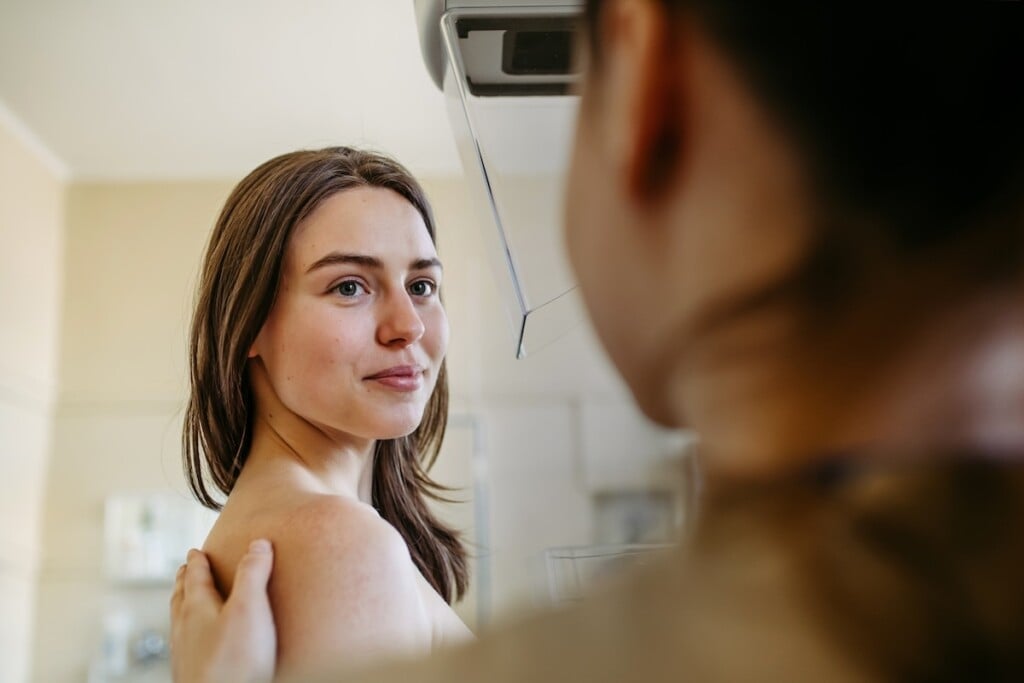
October, Breast Cancer Awareness Month, brings pink ribbons and plenty of reminders about the importance of breast health. And for good reason: Aside from skin cancers, breast cancer is the most common cancer in women in the United States. The American Cancer Society estimates that more than 321,910 women will be diagnosed with invasive breast cancer in 2026, and approximately 42,140 will die from the disease.
Mammograms are an important tool in detecting breast cancer, sometimes finding abnormalities before they can be felt or cause symptoms. But for something so routinely recommended, mammograms can still raise plenty of questions. For example, do they really need to start at 40? How often should you get one? Does having dense breasts complicate the process? Does a mammogram hurt—and can it actually cause harm?
BERGEN spoke with Donna McNamara, M.D., a breast medical oncologist at Hackensack University Medical Center’s John Theurer Cancer Center, to separate fact from fiction and tackle some of the most common misconceptions surrounding mammograms. The goal isn’t to add to the noise, but to provide some clarity—and hopefully encourage readers to have informed conversations with their own health care providers about what screening is right for them.
Myth: “I don’t need a mammogram if my family does not have a history of breast cancer.” “That is a dangerous misconception,” Dr. McNamara says. “In fact, about 80 percent of women diagnosed with breast cancer have no known family history of the disease.” That means a woman cannot assume she is protected simply because breast cancer hasn’t affected her mother, sister or other relatives. While having a family history of breast cancer can increase a woman’s risk, it is far from the only risk factor. Simply being a woman and getting older are also significant factors. For women at average risk, regular screening mammograms are recommended regardless of family history.
Myth: “Mammograms can cause breast cancer because of the radiation.” Some women worry that the radiation used during a mammogram could increase their risk of developing breast cancer. But our expert says that concern shouldn’t keep women from getting screened.
“While it’s true that mammograms use low-dose X-rays, the amount of radiation is extremely small and the risk is negligible compared with the benefit of early detection,” Dr. McNamara says. “The radiation dose from a typical screening mammogram is equivalent to the natural background radiation a person is exposed to over the course of about one to two months.”
Adds the doctor: “Major health organizations agree that the benefits of regular mammograms in finding cancer early far outweigh the potential harm from radiation exposure.”
Myth: “Mammograms are extremely painful.” The fear of pain can be enough to make some women put off a mammogram. “While some women find mammograms uncomfortable or briefly painful, many do not,” Dr. McNamara explains. The discomfort comes from the compression of the breast tissue, but that compression lasts only a few seconds for each image and serves an important purpose. “The compression is crucial for getting a clear, accurate image and reducing the amount of radiation needed,” she says.
If a woman experiences extreme pain during a mammogram, she shouldn’t feel she must simply endure it. “If you experience significant pain, you should always inform the tech, who may be able to make adjustments,” Dr. McNamara advises.
Timing the appointment also can make a difference. “Scheduling the exam for a time when your breasts are least tender, such as the week after your period, can also help minimize discomfort,” she says.
Myth: “Having dense breasts means something is wrong with your breasts.” Breast density refers to the composition of breast tissue—specifically, the proportion of fibrous and glandular tissue compared with fatty tissue. “This is not a disease or an abnormal condition,” Dr. McNamara says. “Having dense breasts is normal and very common; about half of all women have them.”
There is, however, an important distinction women should understand. “Having dense breasts is a risk factor for developing breast cancer,” the doctor says. Dense breast tissue also can make mammograms more challenging to interpret because both dense tissue and tumors can appear white on the image, potentially making some cancers harder for radiologists to see.
So while breast density itself is not something to be alarmed about, it is information women should discuss with their health care providers. Knowing whether you have dense breasts can help you and your doctor make informed decisions about your breast-screening plan.
Myth: “If I have dense breasts, a mammogram won’t work, so I should just get an ultrasound or MRI instead.” A diagnosis of dense breasts can sometimes leave women wondering whether a mammogram is still useful. The answer, according to the oncologist, is yes. “A mammogram is still the essential, goldstandard screening tool for all women, including those with dense breasts,” Dr. McNamara says.
While dense breast tissue can make it more difficult for radiologists to spot some cancers, mammography can still detect many of them. And advances in screening technology have made mammograms even more effective for women with dense breasts. Three-dimensional mammography, or tomosynthesis, can be particularly helpful for women with dense breasts, she says.
However, additional screening may be appropriate, particularly for those who have a family history of breast cancer. Says the doctor: “For some women with dense breasts, especially those with other risk factors, a doctor may recommend supplemental screening with a breast ultrasound or MRI in addition to, but not as a replacement for, their regular mammogram.”
Myth: “Once you reach a certain age, you can automatically stop getting mammograms.” There’s no one universal age at which every woman should stop having mammograms. In fact, the decision becomes more individual as women get older. “This is a nuanced topic with differing guidelines, but there is no definitive ‘stop’ age for all women,” Dr. McNamara says. That’s particularly important because the risk of developing breast cancer increases with age.
Guidelines vary. The U.S. Preventive Services Task Force recommends screening every other year for women ages 40 to 74, but says there is insufficient evidence to determine the balance of benefits and harms of screening women 75 and older. The American Cancer Society takes a different approach, recommending that women continue screening as long as they are in good health and have a life expectancy of at least 10 years.
For women over 74, then, the decision about whether to continue screening should be based on more than age alone. “The decision to continue mammograms after age 74 should be an individual one, made in consultation with a doctor, weighing the patient’s overall health and personal preferences,” Dr. McNamara says.
Myth: “A ‘normal’ mammogram puts me in the clear.” “If I could correct one single belief about mammograms, it would be the dangerous assumption that a ‘normal’ result is a 100 percent clean bill of health that allows you to ignore a lump or any other change you might physically feel,” Dr. McNamara says. “A mammogram is an excellent but imperfect screening tool; it can miss cancers, especially in dense breast tissue or depending on the tumor’s location.”
That’s why screening and personal alertness need to go hand in hand. “The most critical partnership in breast health is between technology and your own self-awareness,” the doctor says. “If your mammogram says everything is fine but your fingers feel a lump or notice a change, you must trust your senses and contact your doctor, as this is the most vital and life-saving action you can take.”