A calming tea break isn’t just good for your mood, it’s good for your body too. Studies suggest black (not herbal) tea improves blood-vessel function, blocks the absorption of fats and helps lower cholesterol. What’s more, both black and green teas are packed with powerful compounds that protect against cancer.
Boost your immune system, improve concentration, enhance creativity and decrease stress by meditating, suggests Kellye Davis, author of The Bliss Principle (theblissprinciple.com). To find your inner bliss, here are Davis’ step-by-step instructions:
“Pilates is a form of exercise originally used for dancers to lengthen the muscles and improve posture,” she says. Now Dunn helps her own patients use basic Pilates moves as a part of the healing process for back injuries. “It’s not stressful on the joints as it stretches the back muscles,” explains Dunn, “and it strengthens abdominal muscles while keeping the spine in a neutral position.”
Set in a lush, 7,00 square feet adorned with live plants and softly glowing candlelight, Castle Rock at La Cantera—named one of the nation’s top 100 spa resorts in Condé Nast Traveler—is home to four massage rooms, two facial rooms, a salon space and more.
Set in a lush, 7,00 square feet adorned with live plants and softly glowing candlelight, Castle Rock at La Cantera—named one of the nation’s top 100 spa resorts in Condé Nast Traveler—is home to four massage rooms, two facial rooms, a salon space and more.
Go ahead—reach for that holiday bowl. A daily serving of nuts—enough to fit in the palm of your hand—packs a much-needed dose of protein and fiber and offers a heart-health boost. They’re cholesterol-free and low in sodium (as long as you stick to unsalted). And each type of nut shines in its own way.
The Cassilianos were in good hands. When Monmouth Medical Center opened its Regional Newborn Center in 1968, the hospital made perinatal history by becoming the first hospital in New Jersey and the first community hospital in the nation to establish a neonatal intensive care unit (NICU). Now a state-designated level III regional perinatal center, it has consistently attained one of the highest infant survival rates among NICUs in the country.
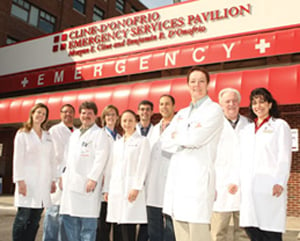
When people need immediate medical care, emergency departments must act quickly and efficiently. But what happens when an ED outgrows its capacity? That was the challenge at Monmouth Medical Center until a recent renovation, because the number of patients using the facility was sharply on the
rise. “The last time the department had an overhaul was back in 1987, when we saw just 27,000 patients a year,” says Catherine Hanlon, M.D., Monmouth’s chair
of emergency medicine. Now that number has soared to a record 54,000 patients a year.